

The first time someone told me, “You should yield before entering the main road,” I just stood there thinking, Yield? Is that like… giving up? 😅 I had seen the word before but never fully understood what it meant in different contexts. Was it something related to driving? Something about money? Or just a fancy way to say “stop”? If you’ve had the same confusion, don’t worry you’re definitely not the only one!
Let’s make it simple:
👉 Quick Answer: Yield means “to give way, produce, or provide something.”
It’s a polite, formal, and clear way to say someone or something should allow, produce, or give something depending on the situation.
🧠 What Does Yield Mean?
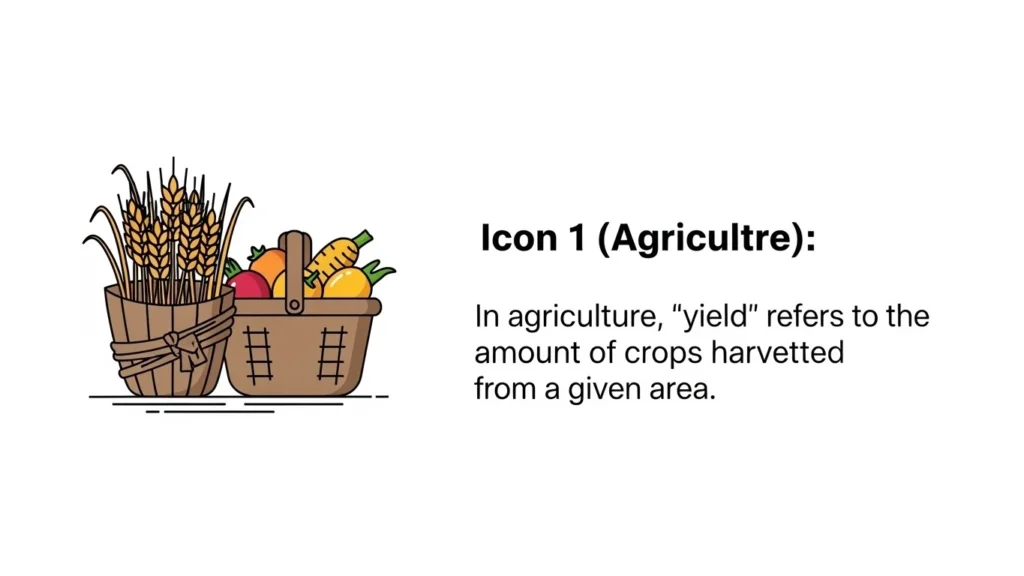
The word yield has three common meanings, depending on context:
1. Yield = Give Way / Let Someone Go First
Often used in traffic, meaning you must let another person or vehicle pass.
Example:
“Drivers must yield to pedestrians.”
2. Yield = Produce / Create / Provide
Used in business, farming, science, and finance to describe something that produces results.
Example:
“The farm yields 200 tons of wheat each year.”
3. Yield = Surrender / Give Up Control
Used when someone gives up power, control, or ownership.
Example:
“He refused to yield the throne.”
⭐ In short: “Yield” = give way, produce, or surrender — depending on the situation.
📱 Where Is “Yield” Commonly Used?
The word appears in many different areas — not just texting. Here’s where you’ll see it most:
- 🚗 Traffic signs (“Yield to oncoming traffic”)
- 💼 Business discussions (“This investment yields profit”)
- 📈 Finance (“High-yield bonds”)
- 🌾 Agriculture (“Crop yield”)
- 📚 School/assignments
- 💬 Everyday conversations (“Please yield the seat”)
- 🔬 Science experiments (“The reaction yielded new compounds”)
Tone:
- Formal
- Clear
- Professional
- Not slang
- Not casual like texting abbreviations
💬 Examples of “Yield” in Conversation
Here are simple, realistic examples showing different meanings:
Traffic Meaning
- A: “Should I stop here?”
B: “No, just yield. Let the other cars pass.”
Produce/Result Meaning
- A: “Did your investment work out?”
B: “Yeah, it yielded a good profit.” - A: “How did the experiment go?”
B: “It yielded unexpected results.”
Give Up/Surrender Meaning
- A: “Did he agree to change the plan?”
B: “Nope, he wouldn’t yield.” - A: “The king yielded the crown?”
B: “Yeah, he stepped down.”
Everyday Formal Use
- A: “Can you yield your spot for a moment?”
B: “Sure, go ahead.” - A: “We need more data.”
B: “This survey should yield enough information.”
🕓 When to Use and When Not to Use “Yield”

✅ When to Use “Yield”
Use it when you want to sound:
- Professional
- Clear and formal
- Polite in instructions
- Scientific or analytical
- Accurate when describing production/results
- Traffic situations
- Business or finance contexts
❌ When NOT to Use “Yield”
Avoid using “yield” when:
- You’re texting casually with friends
- You want a simple word like “give” or “produce”
- The tone is casual or funny
- The audience is children or beginners
- You’re writing social media captions
Comparison Table
| Context | Example Phrase | Why It Works |
|---|---|---|
| Traffic | “Yield to pedestrians.” | Direct & formal instruction |
| Business | “This project will yield strong results.” | Professional & confident tone |
| Finance | “This fund yields 8% annually.” | Standard financial vocabulary |
| Science | “The formula yielded positive outcomes.” | Clear & technical |
| Everyday Casual | “Give me the seat for a moment.” | Casual and simple |
| Texting | “lemme go first lol” | Natural, informal tone |
🔄 Similar Words or Alternatives
| Word | Meaning | When to Use |
|---|---|---|
| Give Way | Let someone go first | Traffic or polite instructions |
| Produce | Create or generate | Business, agriculture, science |
| Provide | Supply something | Professional communication |
| Generate | Cause something to come into existence | Tech, science, business |
| Surrender | Give up control or power | Formal or historical contexts |
| Submit | Give something formally | School, work, official tasks |
❓ FAQs About “Yield”
1. Does “yield” mean stop?
Not exactly.
It means slow down and let others go first, not fully stop — unless necessary.
2. Is “yield” a positive word?
Depends on context. Yielding profits is positive; yielding control can be negative.
3. Is “yield” formal or informal?
Definitely formal. It’s not used casually in everyday texting.
4. What does “yielding results” mean?
It means producing outcomes, often used in business or science.
5. What does “high yield” mean in finance?
It refers to investments that produce high returns.
6. What’s the opposite of yield?
Words like resist, withhold, refuse, or hold firm.
7. What does “yield to pressure” mean?
It means giving in or surrendering because of pressure.
Conclusion
“Yield” is one of those powerful English words with more than one meaning but once you understand the contexts, it becomes incredibly clear. Whether you’re reading a traffic sign, studying finance, discussing business results, or reading a story about someone giving up control, the meaning always connects to the idea of giving, producing, or letting something happen.
Now that you know all the uses, you can confidently understand and use the word anywhere!

Chloe Evans is the creative soul behind the heartfelt stories and magical moments shared on this anniversary journey. Passionate about celebrating love, Chloe brings together the beauty of timeless relationships through inspiring narratives, photography, and personal experiences. With a deep appreciation for the milestones that define true love, Chloe’s words capture the essence of enduring bonds and the joy of every anniversary moment.