
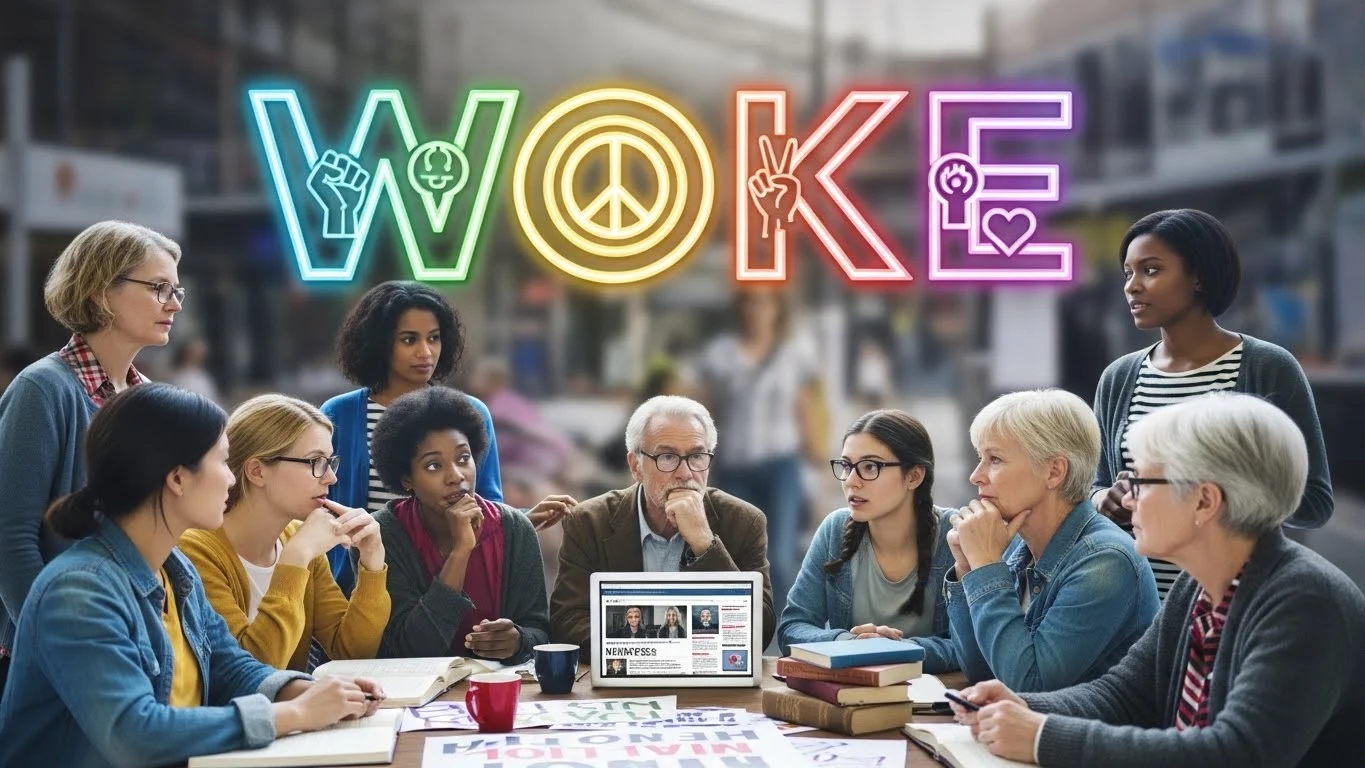
Language constantly evolves, especially in online culture. Words that start inside small communities can suddenly explode into global conversations. One of those viral terms is the word that many people see everywhere on social media feeds, political debates, pop culture, comedy videos, and even corporate marketing.
While some people use it as a compliment, others treat it as an insult. Understanding its meaning requires context, not just a dictionary.
This is not just another buzzword that disappeared after a few months. The term has developed layers of meaning: social, cultural, political, and generational.
To understand it, we must look at how it started, how it changed, and how different groups use it today.
🔥 Quick Answer
Originally associated with awareness of social injustice, the term what does woke mean refers to being alert, conscious, and informed about issues of inequality, especially racism, discrimination, and systemic unfairness.
Over time, it was also used sarcastically or negatively to describe people who are “overly politically correct” or driven by identity-based activism.
How the Term Evolved Through Time
Words don’t remain frozen. They evolve through culture, music, memes, politics, and lived experiences.
🖤 Origins in Black Culture
The earliest use traces back to African American communities. In the early and mid-20th century, the term was closely connected to:
- Awareness of racism
- Understanding police brutality
- Navigating segregation
- Recognizing systemic injustice
It existed in conversations long before it became mainstream. The meaning wasn’t academic; it was survival-based awareness — staying safe, cautious, and informed.
🎵 Music and Pop Culture Amplification
Modern popularity rose when artists embedded the concept into their work. Music became a cultural megaphone:
- Lyrics encouraging awareness
- Spoken activism between songs
- Black artists urging listeners to “stay conscious”
- Hip-hop narratives about street realities and inequality
When musicians said “stay awake,” it wasn’t metaphorical — it was a warning: know what’s happening around you.
Mainstream Explosion: Internet Era & Social Media
🚀 Social Movements
Online platforms accelerated its growth:
- Viral hashtags
- Grassroots protests
- Influencer activism
- TikTok and Twitter threads
Movements such as anti-police violence protests, immigration rights, gender equality, LGBTQ+ rights, and climate activism turned the term into a rallying cry.
It evolved from a slang expression to a digital symbol.
😎 Gen-Z Culture
For teenagers and young adults, the term blended activism and identity:
- “Being informed”
- “Calling out injustice”
- “Educating others”
- “Not ignoring uncomfortable truths”
It became socially trendy — not just political. Students, streamers, gamers, and artists adopted it.
How Different Groups Use the Word
🌍 Educators and Activists
They use it positively, meaning:
- Awareness of systemic biases
- Sensitivity toward marginalized people
- Accountability for harmful behavior
- Respecting lived experiences
In this context, it’s aspirational: be aware, not apathetic.
🤳 Internet Communities
Memes and online arguments changed the tone. Across platforms:
- Reddit threads
- TikTok duets
- Discord debates
- Twitter/X posts
It can be ironic, exaggerated, or sarcastic:
“Bro thinks he’s saving the world because he recycled one bottle.”
Humor makes it relatable, but also blurs the original meaning.
🏛️ Politics & Media
Politicians and media personalities shifted the narrative.
For some, it became a criticism:
- Excessive activism
- Over-correction
- Forced tolerance
- Cancel culture
- Identity-focused policies
Here, the term turned into a debate weapon, a way to label opponents or their values.
The Positive Interpretation
When used in its original or respectful sense, the term speaks to compassion and awareness.
A “woke” person might:
- Stand up for minorities in school
- Understand historical discrimination
- Support gender equality
- Educate others about microaggressions
- Call attention to unfair laws or norms
Examples in real life:
- Telling friends why racist jokes aren’t harmless
- Supporting a coworker facing bias
- Attending peaceful protests
- Donating to relief organizations
- Voting for inclusive policies
This interpretation promotes empathy, accountability, and human dignity.
The Negative Interpretation
Some people use the term as a critique or insult, especially in online arguments.
Examples where it becomes negative:
- “That company is just pretending to care for marketing.”
- “These influencers fake activism for clout.”
- “University policies have gone too far.”
Here it implies:
- Virtue signaling
- Moral superiority
- Excessive performative activism
- Emotions over logic
- Rules that “force equality”
The word becomes shorthand for eye-rolling at modern social culture.
Why The Term Is So Polarizing
1. Cultural Identity
It connects to generational values.
Older generations often see activism differently than younger ones.
2. Political Branding
It’s used in campaigns, commentary, and reactions:
- “Anti–free speech”
- “Too radical”
- “Too soft”
- “Too sensitive”
Both sides claim ownership.
Like many cultural terms, it became a political football.
3. Media Echo Chambers
Each platform exaggerates extremes:
- News networks amplify outrage
- Influencers mimic hot takes
- Online tribes compete for “truth”
As a result, one simple word becomes a battlefield.
Gen-Z Context: Everyday Use
Gen-Z uses casual language for heavy topics.
Instead of long essays, we use short phrases and vibes.
Examples you might see:
Positive
- “Stay awake.”
- “Be conscious.”
- “Educate yourself.”
- “Don’t ignore injustice.”
Neutral/Joking
- “Bro woke up and became a philosopher.”
- “This brand suddenly got woke for Pride month.”
Critical
- “Performative activism is so hollow.”
- “They’re woke until money is involved.”
Notice how tone controls meaning.
The same word shifts depending on how it’s delivered.
Situational Examples
1. Social Media Outrage
A brand posts a “diversity” campaign, but their internal policies don’t match.
People call it fake activism or “woke marketing.”
2. School or University Debates
Students want gender-neutral bathrooms.
Some see it as inclusion; others see it as unnecessary.
3. Corporate Meetings
HR introduces anti-bias training.
Some employees appreciate it, others complain it’s too political.
4. Friend Group Conversations
Someone calls out a sexist joke.
Half the group thanks them; the other half says they’re “too sensitive.”
The same action — different interpretations.
Why Words Like This Go Viral
🧠 Human Emotion
People attach values to language.
A term tied to identity will never be neutral.
📱 Memes & Trends
Short, punchy words spread fast:
- TikTok edits
- Instagram reels
- X posts
- Twitch streams
- Reddit screenshots
They get repurposed hundreds of times, gaining new meanings each round.
📣 Community Validation
Users reward each other through likes, shares, replies, and reactions.
That feedback loop makes the word stronger.
How To Use the Term Responsibly
Before using it, ask:
- Are you describing awareness?
- Are you critiquing activism?
- Are you using sarcasm?
- Are you attacking someone unfairly?
- Are you dismissing real issues?
Language has consequences.
A single word might shut down conversation or open one.
Safer alternatives include:
- “Socially aware”
- “Educated on human rights”
- “Empathetic”
- “Politically conscious”
- “Community-minded”
These avoid stereotype traps and keep discussions balanced.
Why It Matters Today
This term reflects how society talks about:
- Race
- Gender identity
- Immigration
- Climate activism
- Mental health
- Education
- Equality in workplaces
When people argue over the word, they’re rarely arguing about vocabulary.
They’re debating values, lifestyles, and identity.
Understanding it helps us:
- Communicate better
- Avoid misunderstandings
- Respect different viewpoints
- Recognize real activism vs fake branding
Conclusion
Words travel faster than ever.
What once was a private cultural expression, rooted in the lived experiences of Black communities, has become a global identity marker. Now it can mean awareness, activism, sarcasm, or critique.
The meaning you assign to it depends on your lens: your community, your politics, your experiences, and your empathy.
Instead of treating language like a weapon or a joke, learn where it came from. Understand the context before you react.
The world is full of inequalities, and staying informed genuinely, respectfully, responsibly is a skill our generation needs. Trends will change, but empathy never goes out of style.
