
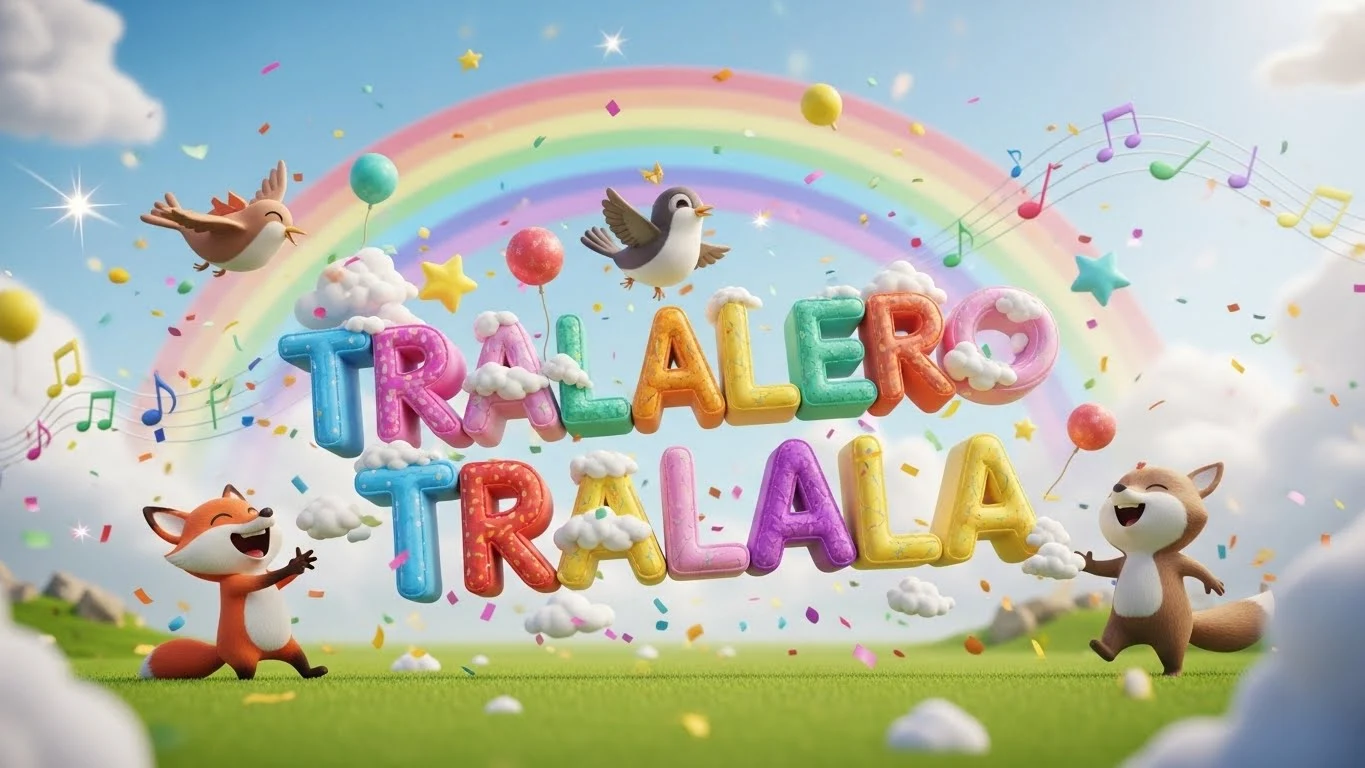
Language evolves in weird, playful, and surprisingly musical ways. Every generation invents sounds, slang, or phrases that become part of everyday expression even when they don’t have a strict dictionary definition.
One of those phrases that many people bump into online or hear in creative content is what does tralalero tralala mean. It sounds like something from a catchy song or a cartoon, but the real meaning behind it is deeper than you’d expect.
Modern internet culture loves words that express emotion, rhythm, or creative energy, not just literal meaning. These kinds of expressions show how humans communicate feelings, vibes, and tones without needing a full sentence.
Even if it looks random on paper, the phrase captures playfulness, melody, and social interaction. Let’s break it down in a way that makes complete sense.
🔥 Quick Answer
“Tralalero” and “tralala” are melodic expressions often used to represent singing, carefree movement, playful vibes, or filler vocal sounds. They don’t carry a literal meaning—think of them as musical onomatopoeia similar to “la-la-la,” “do-re-mi,” or humming lyrics when words don’t matter.
🧠 Why Words Like These Exist
Humans have always expressed meaning beyond vocabulary.
Before we invented complex languages, we communicated through:
- Rhythm
- Tone
- Repetition
- Vocal sounds
- Songs
These sounds still exist today. They show up in chants, nursery rhymes, pop music hooks, and even memes. Some cultures call this nonsense lyrics, others call it scat singing, and musicians sometimes call it vocal improvisation.
The reason this works? Our brains understand emotional intention even when the words aren’t literal.
🎵 “Tra-la-la” in Music History
“Tra-la-la” is far older than the internet.
In classic music and choirs, it was used to:
- Fill gaps without lyrics
- Help singers keep tempo
- Avoid awkward silence in a tune
- Add a playful or whimsical atmosphere
Think of traditional songs, folk melodies, or even choirs warming up.
Instead of, “I don’t know the words,” singers simply vocalized tra-la-la.
Examples you’ve already heard:
- Childlike sing-songs:
🎶 Tra-la-la, I’m walking down the street 🎶 - Cartoon intro songs
- Old European folk songs
- 1950s doo-wop harmonies
No meaning, just vibe.
🎤 Scat Singing: When Voice Becomes an Instrument
Jazz musicians used similar techniques through scat.
Instead of words, they’d use syllables:
- “Shoo-bee-doo”
- “Ba-dap-ba”
- “Zop-diddy bop”
It wasn’t random—it was musical expression.
Vocal sounds became instruments.
Rhythm replaced grammar.
Emotion replaced language structure.
That’s why “tralalero” feels rhythmic—it’s a musical tool.
🌍 Cultural Layers: More Than a Sound
Depending on context, the word combination may communicate different vibes:
1. Carefree movement
Someone skips down the street humming “tralala.”
They’re not stressed. They’re vibing.
2. Emotional escape
A person sings nonsense to cope with awkwardness or sadness.
It gives them rhythm, control, and relief.
3. Playful teasing
Sometimes people sing these sounds to mock something gently:
“Tra-la-laaa, look who’s late again.”
4. Avoiding conversation
When a topic gets awkward:
“Anyway… tra-la-laaa…”
It’s the verbal version of changing the subject with a smile.
🌈 The Psychology Behind Nonsense Lyrics
Sounds like this tap into emotional memory.
You don’t have to think.
You simply feel.
They:
- Trigger nostalgia
- Reduce tension
- Help express energy
- Create rhythm in speech
And because they bypass logic, they’re universal.
No translation needed.
🌐 Internet Culture Loves Rhythmic Words
TikTok, IG Reels, memes—everything online thrives on vibe.
A dumb but catchy sound can:
- Go viral
- Start a trend
- Represent an entire mood
- Become a sound template
Think about:
- “Skibidi toilet”
- “Bing bong”
- “Nyaaa”
- “Blah-blah-blah”
Same structure:
repetition + rhythm + emotional tone.
They don’t need meaning.
They feel like something.
🎮 Gaming & Anime: Sound Effects as Emotion
Gamers and anime fans use nonsense syllables like emojis.
They communicate reactions:
- “Uwu”
- “Nyaa”
- “Ara-ara”
- “Pew pew”
Just like tralala, these signals evoke:
- Softness
- Energy
- Humor
- Whimsy
Not literal.
Pure vibe.
💬 How People Use It in Conversation
To dismiss seriousness
“He’s yelling again? Tra-la-la, ignore him.”
To lighten an awkward moment
“So anyway, tra-la-laaa, want coffee?”
To boost mood
“I’m cleaning the house, tralala tralala.”
The speaker is communicating:
“I’m not taking this too seriously.”
💡 Usage Scenarios That Make Sense
Here are places you’ll hear these expressions naturally:
🟢 1. Singing with no lyrics
You’re humming while washing dishes.
🟢 2. Avoiding conflict
You don’t want drama, so you sing nonsense over it.
🟢 3. Showing childlike joy
Skipping, dancing, being silly.
🟢 4. Creative expression
A songwriter fills gaps before real lyrics are written.
🎭 The Aesthetic Side: Whimsical and Cinematic
Movies use these sounds to communicate a mood without dialogue.
Think:
- Kids dancing through a meadow
- A character in their own world
- An overly cheerful villain
Directors love this because the audience instantly knows:
This character is carefree, eccentric, or emotionally distant.
The sound is visual—no subtitles needed.
🧬 Linguistic Style: Onomatopoeia + Reduplication
These words follow two powerful language patterns:
1. Onomatopoeia
Words that sound like the action:
- buzz
- hum
- boom
The sound represents the behavior.
2. Reduplication
Repeating a syllable for emphasis:
- na-na-na
- ha-ha-ha
- ba-ba-ba
Repetition = music + rhythm + emotional signal.
🤳 Social Media Example (Gen Z energy)
Imagine a TikTok POV:
“Walking into the semester pretending life is easy
tralalalaaaa 🎶✨”
No meaning.
Maximum vibe.
The audio instantly communicates:
I’m vibing and ignoring stress.
The audience relates.
🧩 Why People Ask For Its Meaning
Because our brains crave labels.
We want everything to translate into a neat definition.
But some expressions exist purely to:
- fill silence
- soften tone
- let emotion speak
That’s why trying to force a literal definition misses the point.
It’s not a word.
It’s a sound with feeling.
🌟 How to Use It
You can use it like a linguistic emoji:
- To lighten your message
- To sound playful
- To express mood when language fails
- To remove emotional heaviness
Try these examples:
- “Finished homework, tralala.”
- “Bills due tomorrow… tralalalaaaa.”
- “I’m cleaning the room, tralala.”
Notice something?
It softens reality.
🧘♂️ Therapy Angle: Vocalization and Relaxation
Many therapists encourage vocalizing sounds because:
- It activates breath control
- Reduces anxiety
- Improves mood
- Releases tension in speech
That’s why people hum while working or walking.
Those little noises keep your brain steady.
It’s emotional self-regulation disguised as silliness.
🧠 The Secret Rule: Context > Translation
The sounds don’t have a meaning on their own.
Their meaning comes from:
- Who said it
- Tone
- Situation
- Social energy
- Intention
Example:
Scenario A:
Someone is skipping happily and singing “tralalala.”
→ Joyful, carefree.
Scenario B:
Someone says it after a long rant.
→ Avoidance, deflection.
Scenario C:
A teacher says it to calm a class.
→ Soft authority.
Same syllables.
Different meaning.
📚 Historical Note: European Roots
“Tra-la-la” has shown up for centuries in:
- Italian folk songs
- French theatre
- English nursery rhymes
- Romanian holiday music
It represented:
- Crowd unity
- Dance rhythms
- Non-lyrical chorus parts
It predates modern slang.
It’s more cultural than linguistic.
🧑🤝🧑 Social Connection: Why People Use It Together
People don’t hum alone.
We mimic group behaviors.
When one person sings tralala, others join in.
It acts like a bonding tool:
- We’re relaxed
- We’re safe
- We’re playful
Words become vibes.
Vibes become memories.
Think childhood:
Playing in the street, inventing songs, no stress.
That feeling?
That’s the real meaning.
📱 Digital Language 101
Gen-Z turned nonsense sounds into text-based expressions.
Why?
Because:
- They’re universal
- They bypass grammar
- They carry mood instantly
Typing “tralalalaaa” feels like exhaling happiness.
Typing “tralala—ignore the drama” feels like boundaries.
Memes taught us:
Emotion > grammar.
🏁 Conclusion
“Tralalero” and “tralala” aren’t meant to be deciphered like formal dictionary entries. They are musical expressions that communicate feelings, mood, and rhythm.
They show up in ancient folk songs, jazz improvisations, cartoons, memes, TikToks, and casual conversations because they create instant emotional clarity. We don’t need translation to understand vibes.
When you see or hear it, don’t ask “What is the literal definition?”
Ask instead:
“What is the person trying to express?”
Once you do that, the phrase makes perfect sense.
