

You know that moment when you’re scrolling through DMs or texting someone, and suddenly they reply with “sm” and you just sit there staring at it like, “Okay… what does that mean?” 😅
I remember the first time I saw it. Someone texted, “I love this sm,” and I thought it was some insider slang I completely missed. Turns out, it’s way simpler (and way cuter) than I expected. If you’ve been confused too, you’re definitely not alone.
👉 Quick Answer: SM means “so much.”
It’s a casual, friendly, and sometimes flirty way of expressing strong feelings like appreciation, love, excitement, or emphasis.
🧠 What Does SM Mean in Text?
SM stands for “so much.”
People use it when they want to emphasize a feeling in a quick, shorthand way.
It’s commonly used when expressing love, gratitude, excitement, or intensity.
Example:
A: “thank u for helping me today”
B: “ofc!! i appreciate u sm 💛”
⭐ In short: SM = So Much = Used to show strong feelings or emphasis.
📱 Where Is SM Commonly Used?
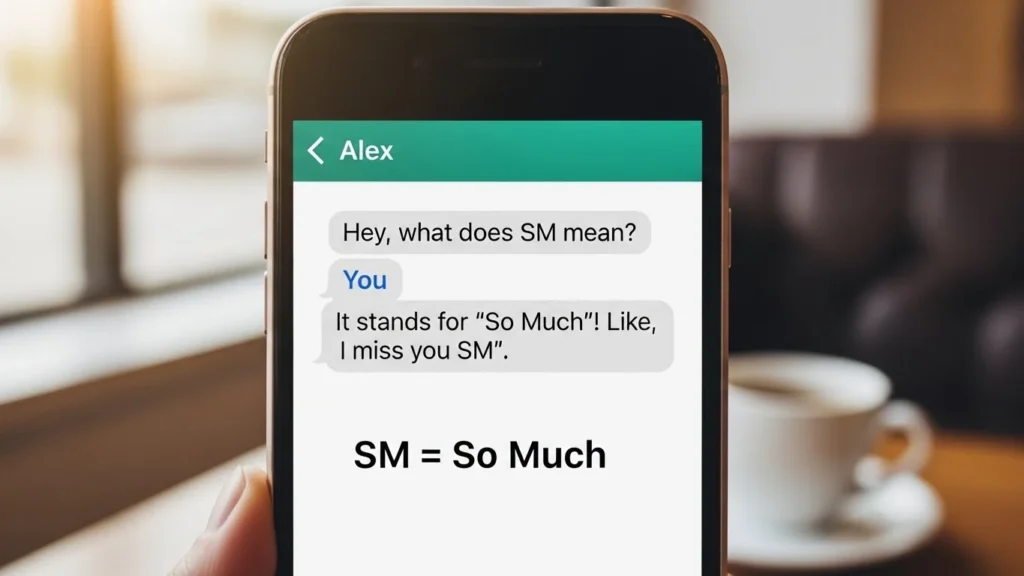
You’ll see SM in casual, expressive, friendly online conversations. It’s extremely common in:
- 📱 Text messages
- 💕 Instagram DMs
- 💬 Snapchat
- 🐦 Twitter/X
- 🎮 Discord or gaming chats
- 🧡 TikTok comments
- 🔥 Group chats with friends
✨ Tone:
- Casual
- Friendly
- Emotional
- Sometimes flirty 😉
- Not suitable for formal or professional settings
💬 Examples of SM in Conversation
Here are realistic chat-style examples showing how people actually use “sm”:
- A: “i missed u today”
B: “aww i missed u sm 😭💗” - A: “thanks for the help bro”
B: “no problem, appreciate u sm!” - A: “this song hits sm omg”
B: “fr it’s perfect 😭” - A: “ur dog is cute”
B: “ik he loves attention sm 😂” - A: “ily sm”
B: “stoppp that’s so sweet 😭💞” - A: “we should hang out”
B: “yessss sm” - A: “why you smiling at your phone”
B: “bc ur message made me happy sm 😳💗”
🕓 When to Use and When Not to Use SM
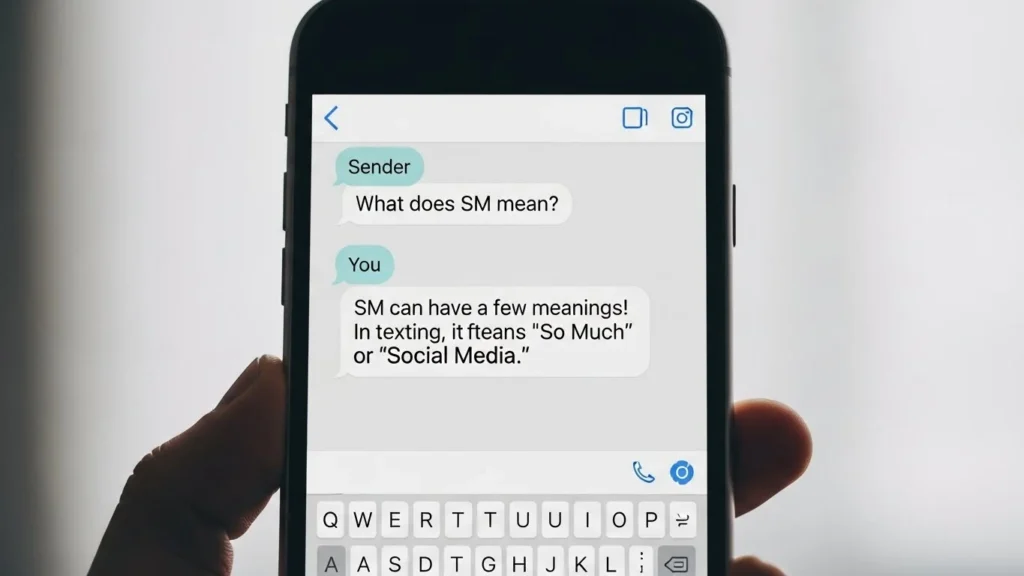
✅ When to Use SM
Use SM when:
- Expressing strong feelings casually
- Complimenting someone
- Showing affection or gratitude
- Texting close friends, siblings, or your partner
- Speaking in a flirty or emotional tone
- Responding quickly on social media
❌ When NOT to Use SM
Avoid SM when:
- Communicating professionally
- Talking to teachers, managers, or clients
- Writing formal emails
- Explaining something serious
- Needing clear, non-slang language
Comparison Table
| Context | Example Phrase | Why It Works |
|---|---|---|
| Friend Chat | “thanks sm for today 😭💛” | Warm & casual |
| Flirty Chat | “i like u sm it’s crazy 👀” | Soft, emotional vibe |
| Work Chat | “Thank you so much.” | Professional & clear |
| “I appreciate your help very much.” | Formal & respectful | |
| Social Media | “love this sm omg” | Short & expressive |
🔄 Similar Slang Words or Alternatives
| Slang | Meaning | When to Use |
|---|---|---|
| ILYSM | I love you so much | Strong emotional or romantic chats |
| TYSM | Thank you so much | Appreciation, gratitude |
| FR | For real | Emphasizing agreement |
| OMG | Oh my God | Showing excitement or shock |
| LOKI/LOWKEY | Slightly, secretly | When expressing subtle feelings |
| HML | Hit my line | Casual, friendly communication |
❓ FAQs About SM
1. Is SM the same as “so much”?
Yes! SM is simply the short version of “so much.”
2. Is SM flirty?
It can be.
“ily sm 😳” or “i miss u sm” definitely carries soft, flirty energy.
3. Should I use SM in professional messages?
No. Always avoid slang at work.
4. What does “ily sm” mean?
It means “I love you so much.”
5. Does SM ever mean something else?
Rarely, but in some fandoms it can mean “sadly mistaken” or “social media,” depending on context.
But 99% of the time in texting, it means “so much.”
6. Is SM a Gen-Z slang term?
Yes—Gen-Z popularized it, but many Millennials use it too.
7. Is SM positive or negative?
Usually positive (love, excitement), but it can emphasize anything, like:
“this hurts sm 😭”
Conclusion
“SM” is one of the easiest, most expressive slang terms you’ll come across in modern texting. Whether you’re showing affection, hyping something up, thanking someone, or just expressing an emotion with extra emphasis, SM helps you do it quickly and naturally.
Now that you know what it means, you’ll never get confused again — and you can use it confidently in your chats!
