
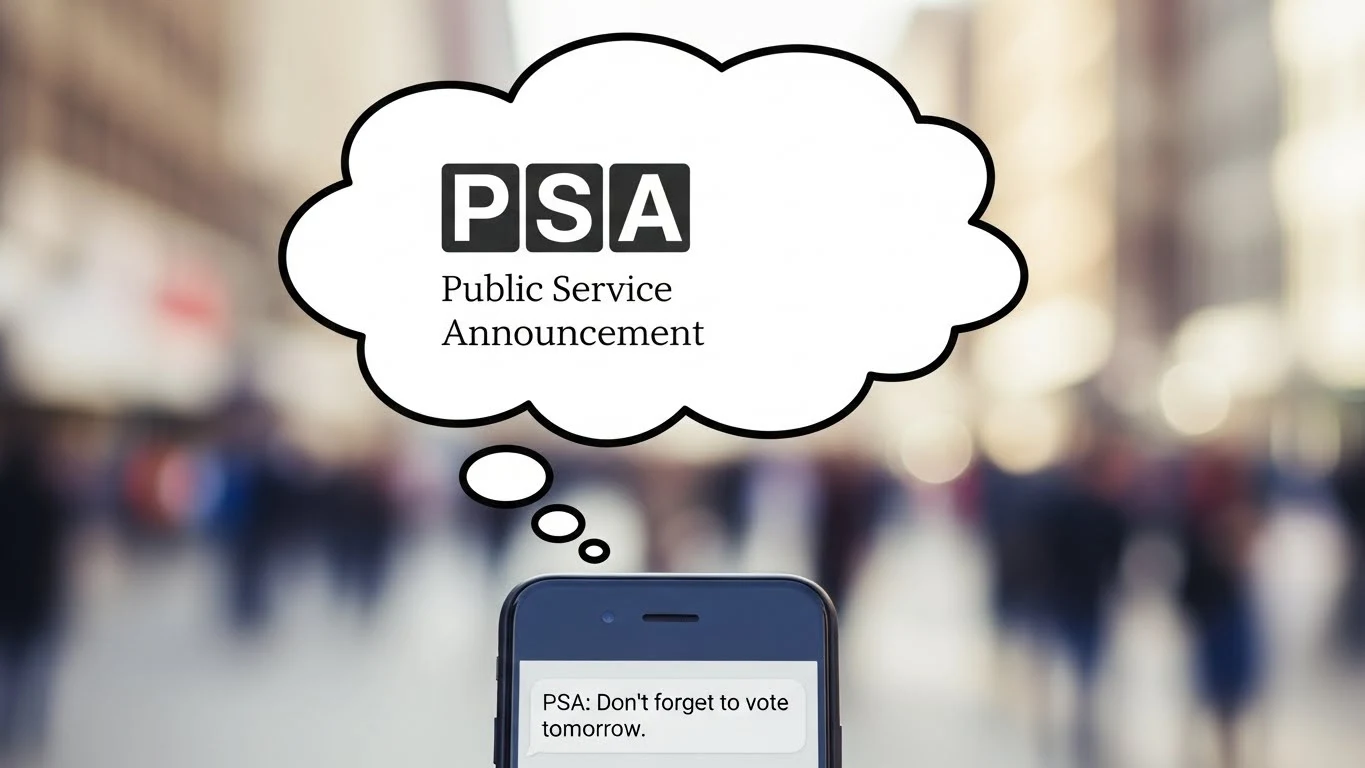
Texting has its own language. Short words. Fast replies. Zero patience for long explanations. And right in the middle of all that? PSA.
You’ve probably seen it in group chats, Instagram captions, TikTok comments, or Twitter posts.
Someone starts a message with “PSA:” and suddenly it feels important. But what exactly does it mean in texting, and why does everyone use it?
Let’s break it down in a way that’s simple, trendy, Gen-Z friendly, and actually useful.
🚀what does psa mean in text🚀
Quick Answer
PSA stands for Public Service Announcement.
In texting and online conversations, it’s used to grab attention and share important, helpful, or awareness-based information often in a casual or humorous way.
Think of it as saying:
👉 “Hey, listen up. This matters.”
🧠 The Original Meaning of PSA (Before Texting)
Before it became a texting trend, PSA was a serious term.
Traditionally, a Public Service Announcement was:
- A short message on TV or radio
- Created to inform or warn the public
- Often about health, safety, or social issues
Examples:
- Seatbelt safety ads
- Anti-smoking campaigns
- Public health warnings
Over time, the internet took this formal term and turned it into something more casual—and way more relatable.
📱 How PSA Is Used in Text Messages Today
In modern texting, PSA has evolved.
Now it usually means:
- A heads-up
- A friendly warning
- A life tip
- A hot take
- A dramatic announcement (sometimes jokingly)
It’s not always serious. In fact, it’s often playful.
Example:
PSA: Don’t text your ex after midnight.
That’s not government advice—but it still feels important, right?
💬 Common Texting Scenarios Where PSA Is Used
🧑🤝🧑 Group Chats
PSA works great when you want everyone’s attention.
Example:
PSA: The meeting is cancelled tomorrow.
📸 Social Media Captions
Creators use it to sound bold and confident.
Example:
PSA: Drinking water fixes 90% of your problems.
😂 Jokes & Sarcasm
Sometimes PSA is used ironically.
Example:
PSA: Pizza is better than people.
💡 Advice or Awareness
It can introduce something genuinely helpful.
Example:
PSA: Always check the address before ordering food.
🔥 Why PSA Became So Popular Online
PSA didn’t go viral by accident.
Here’s why people love using it:
- Instant authority – It sounds official
- Attention-grabbing – People stop scrolling
- Short & punchy – Perfect for fast platforms
- Flexible tone – Can be serious or funny
- Relatable – Feels like shared wisdom
It’s the internet’s way of saying:
“I’m about to say something worth hearing.”
🧾 PSA vs FYI vs Heads-Up
These phrases look similar, but they hit differently.
PSA
- Stronger
- More dramatic
- Often emotional or opinionated
FYI
- Neutral
- Informational
- Low drama
Heads-Up
- Casual
- Friendly warning
- One-on-one vibe
Example Comparison:
- PSA: Don’t update your phone during exams.
- FYI: The app has a new update.
- Heads-up: The app might crash today.
😎 Is PSA Formal or Casual?
In texting and social media, PSA is casual.
It sounds formal—but that’s part of the joke.
You wouldn’t usually write it in:
- Official emails
- School essays
- Work reports
But in digital spaces? Totally normal.
🧩 Does PSA Always Mean Something Serious?
Nope. And that’s the fun part.
PSA can be:
- Serious – health tips, warnings
- Helpful – advice, reminders
- Funny – exaggerated opinions
- Sarcastic – mock announcements
Funny example:
PSA: If they wanted to, they would.
🧠 How to Use PSA Correctly in Text
Using PSA is easy, but timing matters.
✅ Do This:
- Use it before important info
- Keep the message short
- Match the tone to the situation
❌ Avoid This:
- Overusing it
- Using it for boring info
- Making it confusing
Good Use:
PSA: Screenshots last forever.
Bad Use:
PSA: I ate cereal today.
🧑🎓 What PSA Means to Gen Z & Millennials
For younger users, PSA isn’t just a word—it’s a vibe.
It signals:
- Confidence
- Self-awareness
- Humor
- Relatability
It’s often used to:
- Drop wisdom
- Call out behavior
- Share “unspoken rules”
Example:
PSA: Healing isn’t linear.
📌 PSA in Instagram, TikTok & Twitter
On social platforms, PSA often introduces:
- A life lesson
- A trend commentary
- A personal boundary
- A hot take
Creators use it because:
- It boosts engagement
- It sets expectations
- It sounds bold
Example caption:
PSA: Protect your peace at all costs.
🗣️ Is PSA Used in Spoken Language?
Sometimes—but mostly jokingly.
Someone might say:
“Public service announcement…”
Right before:
- Giving advice
- Making a dramatic point
- Calling something out
It’s usually playful, not literal.
🧠 Emotional Meaning Behind PSA
Beyond the definition, PSA carries emotion.
It often implies:
- “I care enough to tell you”
- “Learn from my mistake”
- “This helped me, maybe it helps you”
That’s why it feels personal—even when posted publicly.
❓ FAQs About PSA in Texting
Is PSA slang?
Not originally, but it functions like slang online.
Can PSA be rude?
Not by itself—but tone matters.
Is PSA used worldwide?
Yes, especially in English-speaking online spaces.
Can brands use PSA?
Yes. Many brands use it for awareness campaigns.
🏁 Final Thoughts: Why PSA Still Matters Online
PSA has survived because it works.
It’s short.
It’s powerful.
It cuts through noise.
In a world full of endless messages, PSA tells people to pay attention—whether you’re sharing wisdom, humor, or a simple reminder.
Use it wisely.
Use it sparingly.
And when you do use it—make it count.
