
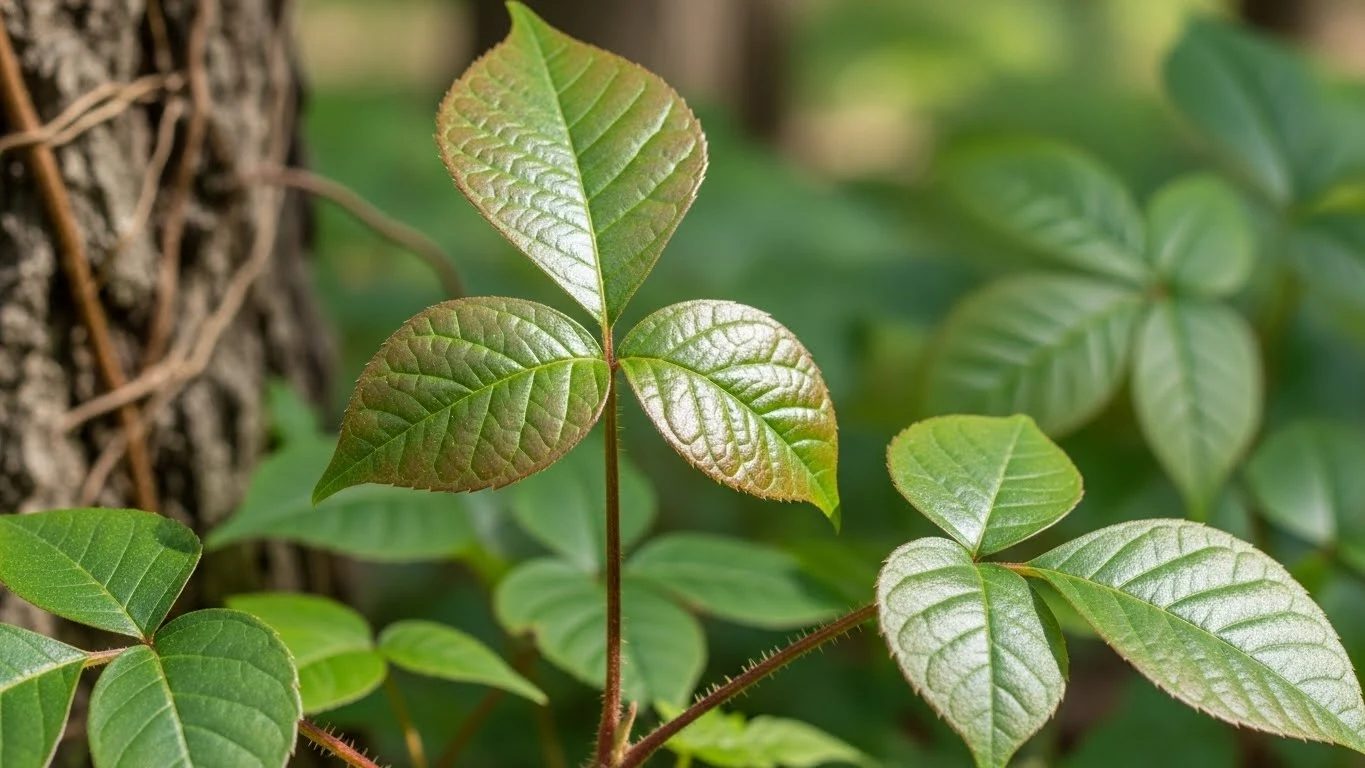
Poison ivy is one of those plants everyone thinks they know, but its appearance changes depending on the season, the region, and even the age of the plant.
Whether you’re hiking, gardening, camping, or just chilling in your backyard, spotting this sneaky plant can save you days of itching, burning, and discomfort.
Let’s break it down in the most useful, easy-to-remember way possible like a Gen-Z field guide that makes you say, “Not today, nature.”
🌿 Quick Answer
Poison ivy is usually recognized by clusters of three almond-shaped leaflets, with the middle leaflet longer than the others.
The leaves can be shiny or matte, turn red in spring, green in summer, and yellow/orange in fall. The plant can grow as a vine, a shrub, or ground cover and it often hides in plain sight.
👀 Visual Traits to Help You Spot It
Understanding physical markers is key. Poison ivy has a few signature characteristics:
🌱 The Famous “Leaves of Three”
- The plant grows three leaflets per stem node, never four or five.
- The center leaflet has a longer stalk (petiole) than the two side leaflets.
- Edges can be smooth, lobed, or slightly jagged—don’t rely on edge shape alone.
- Young spring leaves may look bronze or reddish (don’t be fooled—still rash-ready).
- Mature leaves are typically medium to deep green.
🌿 Shiny or Matte: Both Are Normal
Some people think poison ivy is always glossy, but that’s a myth.
- Young leaves often appear shiny.
- Older leaves can be dull or matte.
- Wet plants naturally look shinier.
So don’t gamble your skin on leaf shine alone.
🌳 Growth Forms: Vine, Shrub, or Ground Creeper
Poison ivy is the ultimate plant influencer—it adapts to whatever environment it’s in.
🧗♂️ As a Vine
- Often climbs trees, fences, or walls.
- The vine’s aerial roots look like hairy brown fibers.
- Older vines may look like thick, fuzzy ropes wrapping around trunks.
🌾 As a Ground Cover
- Common on trails, parks, and forest floors.
- Can form carpets of low, leafy stems.
- Often blends with grass or other plants—beware while mowing lawns.
🌿 As a Shrub
- Found in sunny, open areas.
- Grows upright, about 2–4 feet tall.
- Looks like a compact plant with abundant leaf clusters.
🍇 White Berries = 🚨 Danger
Poison ivy produces pale, waxy berries—not for snacking.
- Usually appear in late summer to fall.
- Color: white to cream, sometimes slightly greenish.
- Birds love them; humans should stay away.
Fun fact: Wildlife can eat these berries safely. We, unfortunately, cannot.
🌦️ Seasonal Changes to Watch
One of the biggest mistakes beginners make? Thinking poison ivy looks the same all year. Here’s how it levels up seasonally:
🌸 Spring
- Leaves emerge reddish or coppery.
- Often appear tender and shiny.
- This is when oils are very active.
☀️ Summer
- Leaves are rich green and full size.
- The plant is thriving and produces maximum urushiol oil.
- Shrubs and vines become more camouflaged.
🍂 Fall
- Leaves turn yellow, gold, or deep orange.
- Berries are visible.
- Still dangerous—color change doesn’t remove toxicity.
❄️ Winter
- No leaves, just vines and stems.
- Bare vines with hair-like roots can still cause rashes.
- Don’t touch “safe-looking” brown ropes on tree trunks.
🔥 The Real Enemy: Urushiol
The reason poison ivy is infamous isn’t the plant itself—it’s the urushiol oil found in leaves, stems, and roots.
Why It’s Brutal:
- Invisible on skin
- Transfers easily
- Sticks to tools, clothing, pet fur
Just 0.001 milligrams of urushiol can cause a reaction. You don’t need to rub your face on a leaf—just brushing past it is enough.
🤕 What Happens If You Touch It?
The reaction varies, but here’s the usual timeline:
- 24–72 hours: Redness, itching, swelling
- 48–96 hours: Fluid-filled blisters
- Next 1–2 weeks: Scabs form, skin slowly heals
The rash is not contagious, but the oil is. If it remains on clothes or pets, you can get reinfected.
🧠 Real Situations Where People Miss It
Let’s get relatable:
🏕️ Camping
You sit on a fallen log. No leaves = “safe,” right?
Wrong. That log is wrapped in old vines carrying urushiol.
🐾 Walking your dog
Your pet runs through a patch of ground plants.
You pet them later → rash appears.
The dog doesn’t care. You regret everything.
🏡 Backyard gardening
You pull a “cute plant” next to the fence → turns out it’s poison ivy vine.
Gloves, tools, sleeves—everything gets contaminated.
❌ Common Misconceptions
These ideas get people in trouble:
- “Poison ivy only grows in forests.” Nope. It loves suburbs, parks, and fences.
- “I’m immune.” Maybe temporarily. Sensitivity increases over time.
- “Burn it to get rid of it.” Never. Burning releases urushiol into smoke and causes lung injuries.
🆚 Look-Alike Plants (And How to Tell Them Apart)
👉 Virginia Creeper
- Has five leaflets, not three.
- Vines look similar but berry clusters are darker.
👉 Box Elder Saplings
- Leaves appear in sets of three, but stems are directly opposite each other.
- Poison ivy leaf stems alternate.
👉 Blackberry or Raspberry
- Prickly stems.
- Leaves often textured and serrated.
When in doubt? Assume the worst.
🛡️ Prevention Hacks That Actually Work
Here’s how to protect your skin and sanity:
- Wear long sleeves, pants, and gloves outdoors.
- Learn to recognize vines and the “three leaf” pattern.
- Clean tools and shoes after yard work.
- Wash pets if they run into brush or woods.
- Take showers after outdoor trips—preferably within 30 minutes.
🧴 How to Handle Exposure
If you think you’ve touched poison ivy:
🚿 Step 1: Wash Immediately
Use cold water and dish soap.
Hot water opens pores → more absorption.
👔 Step 2: Clean Everything
- Clothing
- Shoes
- Tools
- Pet collars or leashes
💊 Step 3: Soothe It
- Calamine lotion
- Hydrocortisone cream
- Antihistamines (if needed)
- Cool compresses
If your eyelids, face, or lungs are affected—go to a doctor ASAP.
🌍 Where Poison Ivy Likes to Live
Think of it as an opportunist:
- Trails and edges of forests
- Creek banks
- Suburban fences
- Roadside ditches
- Abandoned lots
- Shady corners of yards
It loves disturbed soil, partial shade, and places where humans pass through.
💡 The One Phrase You’ll Never Forget
Leaves of three, let it be.
Berries white, run in fright.
It sounds silly, but it can save you from weeks of misery.
🏁 Conclusion
Learning to recognize poison ivy is nature survival 101. Whether it’s a shiny new leaf in spring, a lush green creeper in summer, or a golden shrub in fall, the plant’s danger stays the same.
Watch for three-leaf clusters, hairy vines, and white berries. Respect it, avoid it, and when in doubt leave it alone. Your skin will thank you.
