
If you’ve ever been scrolling through NBA injury reports or live game updates, you’ve probably seen “GTD” next to a player’s name.
And maybe you paused thinking, “Wait… what does GTD mean?” Don’t worry—you’re not alone. Fans, fantasy basketball players, and even casual viewers often get tripped up by NBA shorthand.
Let’s break it down clearly and in a fun, easy-to-read way.
GTD in NBA: What It Really Means 💡
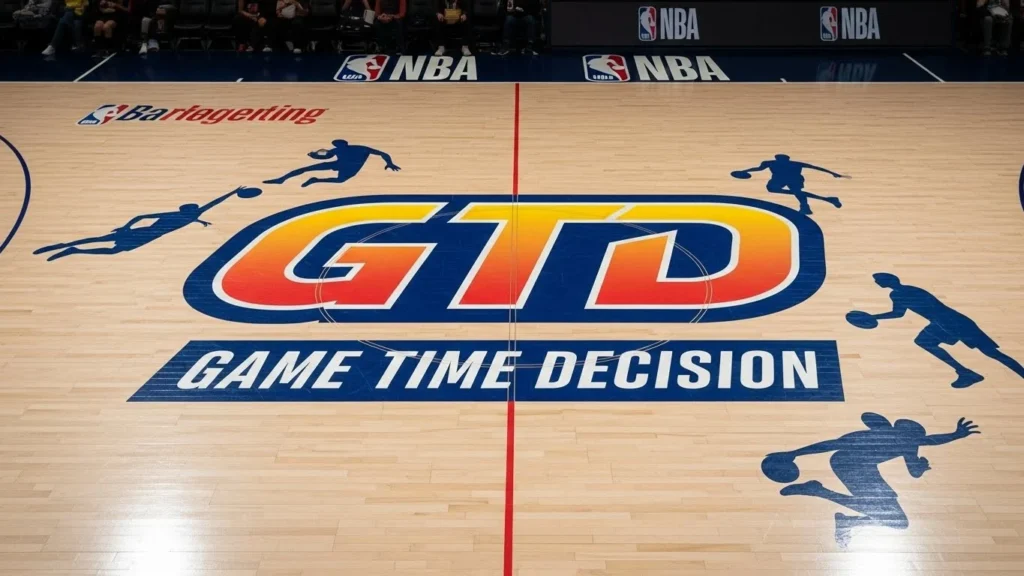
GTD stands for “Game-Time Decision.”
When a player is listed as GTD, it means their participation in the upcoming game is uncertain. Coaches and medical staff aren’t sure if the player will play due to:
- An injury
- Illness
- Fatigue or load management
- Other personal or strategic reasons
Think of GTD as the NBA’s way of saying: “We’ll know at tip-off if this player is in.”
Here’s a quick comparison of player statuses:
| Status | Meaning | Likelihood of Playing |
|---|---|---|
| Out ❌ | Will not play | 0% |
| GTD ⏰ | Game-time decision | 50/50 |
| Questionable ⚠️ | Might play | ~25–50% |
| Probable ✅ | Likely to play | ~75%+ |
So GTD is the ultimate cliffhanger for fans.
Why Players Are GTD 🩹
Players get a GTD label for several reasons:
- Minor injuries: Sprains, strains, or lingering soreness that could improve before the game.
- Illnesses: Flu, stomach issues, or COVID-19 protocols can make a player’s status uncertain.
- Load management: Teams may strategically rest star players to avoid bigger injuries.
- Other factors: Travel, personal matters, or coaching decisions.
Basically, GTD is the middle ground between “out” and “fully cleared.”
How GTD Affects NBA Games ⚡

A GTD player can dramatically change the game’s outcome:
- Lineup adjustments: Coaches tweak rotations if a star might or might not play.
- Fantasy basketball: GTD players create uncertainty—do you start them or sit them?
- Sports betting: Point spreads and odds can shift depending on a player’s GTD status.
- Team morale: Just knowing a key player might play can boost or stress teammates.
So GTD isn’t just a label—it can influence strategy, fantasy points, and even fan excitement.
Real GTD Examples from the NBA 🏀
Here’s how GTD has played out for some stars:
- LeBron James: Often GTD due to ankle soreness, keeping Lakers fans anxious until tip-off.
- Stephen Curry: GTD in games with minor injuries, forcing Warriors to adjust strategies.
- Joel Embiid: GTD due to knee or back issues, leaving 76ers fans glued to updates.
Fans also love speculating and creating memes about GTD players, which keeps social media buzzing.
How Coaches Decide GTD 🏋️♂️
The process is not random. Coaches and medical staff evaluate:
- Medical assessment: Team doctors review the player’s injury.
- Practice observation: Players may do light drills to test readiness.
- Pain evaluation: Can the player perform without risking more injury?
- Strategy consultation: Coaches weigh whether resting the player benefits the team.
By game time, the final decision is announced, which can either excite or disappoint fans.
GTD vs Other Injury Statuses 🔍
Fans often mix up GTD with other terms:
- Out ❌: Player won’t play.
- Questionable ⚠️: Might play—uncertain.
- Probable ✅: Likely to play.
- GTD ⏰: We’ll know at tip-off—unpredictable.
GTD adds suspense and keeps everyone guessing until game time.
GTD in Fantasy Basketball & Betting 🤑
For fantasy and betting enthusiasts, GTD is a big deal:
- Fantasy basketball: A GTD player could make or break your matchup. Always have a backup plan.
- Sports betting: Spreads, totals, and odds shift if a key player is GTD.
- Notifications: Fantasy apps often update players’ GTD status minutes before the game.
Pro tip: Never assume a GTD player will play—wait for the official announcement.
GTD Isn’t Just NBA Stuff 🌎
GTD is used in other sports too, like football, hockey, and soccer, whenever a player’s participation is uncertain due to injury or illness.
So knowing GTD is useful for any sports fan—it’s not exclusive to basketball.
Why GTD Keeps Fans Hooked 😎
GTD adds drama, suspense, and hype:
- Social media buzz: Fans speculate, post memes, and hype up games.
- Team rivalries: GTD players in big games make matchups even more intense.
- Fan excitement: There’s nothing like last-minute confirmation that a star will play.
Quick Tips for Handling GTD Info ✅
- Follow official team accounts for real-time updates.
- Check fantasy apps and sports news before making decisions.
- Plan your viewing party around confirmed lineups.
- Enjoy the suspense—it’s part of the live NBA experience.
Conclusion 🎯
So next time you see GTD in NBA updates, remember: it’s a Game-Time Decision, meaning the player might or might not play. It keeps games unpredictable, fans engaged, and fantasy managers on their toes.
From LeBron to Curry to Embiid, GTD is part of the thrill of being an NBA fan—because you never know what’s coming until tip-off.
