
In the modern digital world, conversations around identity, respect, bias, and equality are now mainstream.
Whether it’s a viral TikTok, a company’s hiring statement, or global social movements, one term keeps appearing: DEI. If you’ve ever paused mid-scroll and wondered 🚀what does dei stand for🚀, this guide is for you.
Forget complicated jargon you’re about to get a simple, practical breakdown of what DEI means, why it matters, and how it shows up in real life, school, workplaces, and everyday interactions.
🔥 Quick Answer (0% Confusion)
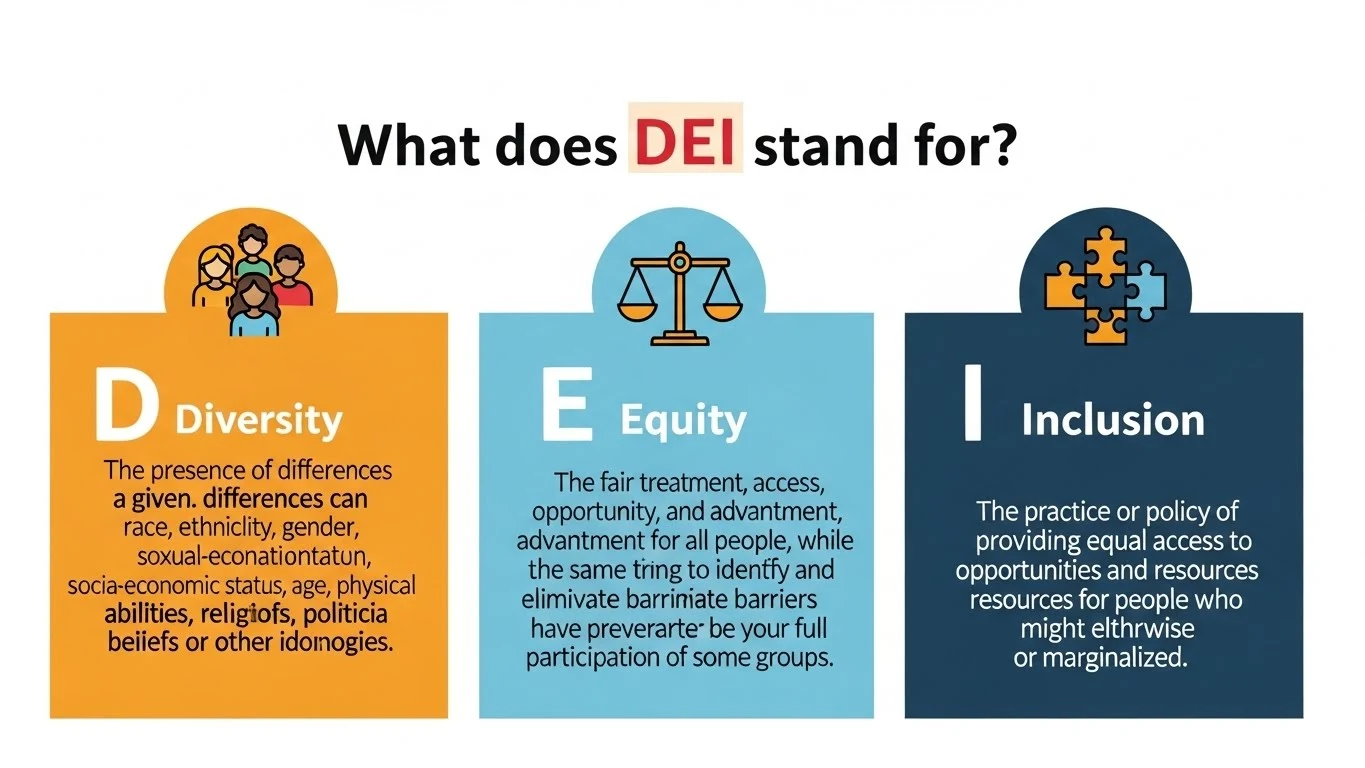
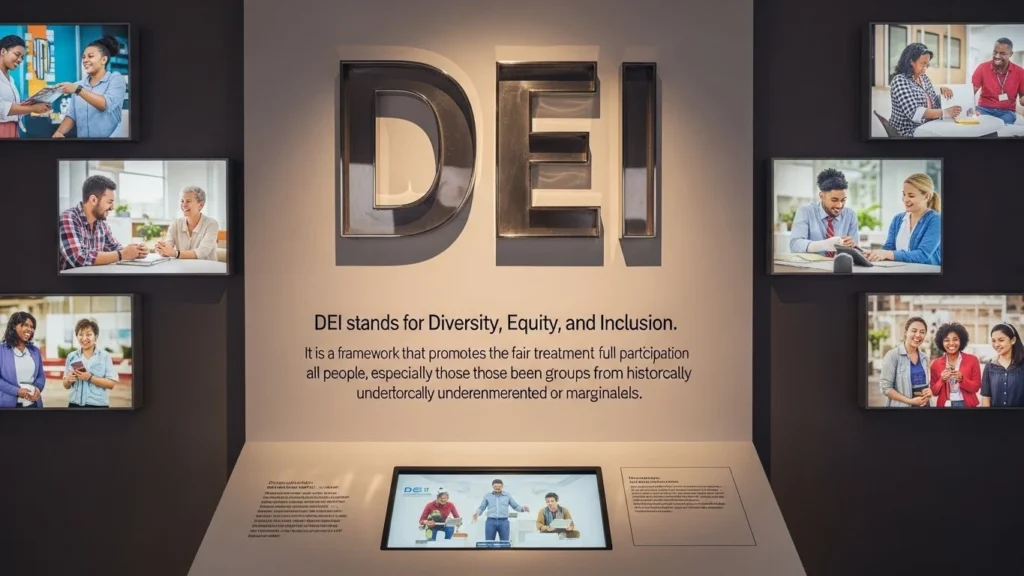
DEI = Diversity + Equity + Inclusion
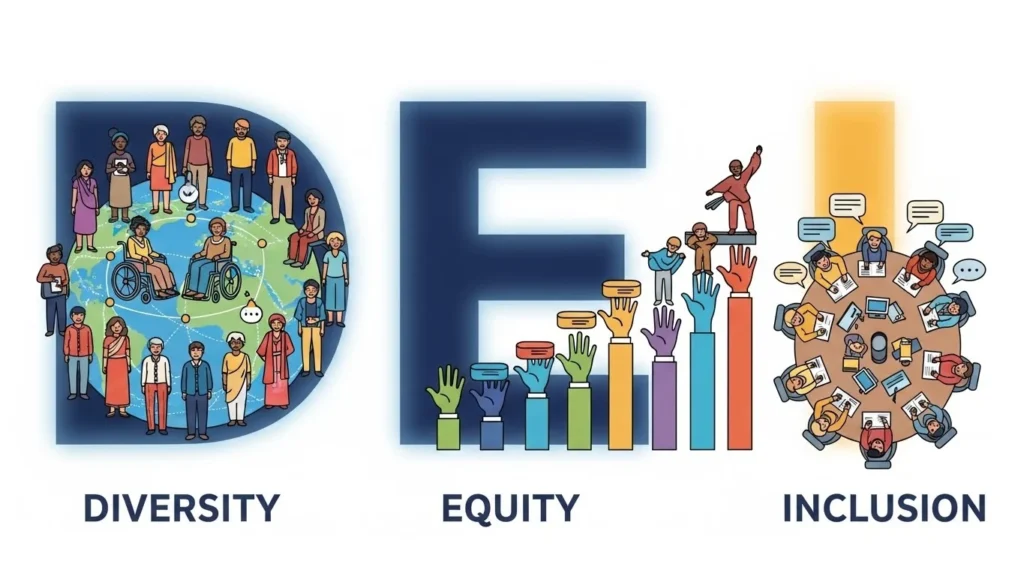
- Diversity → Welcoming different identities, backgrounds, and perspectives.
- Equity → Providing fair opportunities, support, and access according to individual needs.
- Inclusion → Making sure everyone feels seen, heard, respected, and empowered.
In short: Diversity brings people in. Equity makes it fair. Inclusion makes it feel like home.
Why These Three Words Matter Today
We’re living in a time where identity, belonging, and representation are real topics — not “nice-to-have” side conversations. Gen-Z doesn’t just want companies to talk about fairness… we expect them to practice it. From universities to Fortune 500 companies, DEI is now a core pillar of culture, hiring, marketing, product design, and leadership.
It’s not just about creating diverse groups; it’s about building environments where differences are strengths — not obstacles.
🏳️🌈 Understanding Diversity: Humans Are Not Copy-Paste
Diversity means acknowledging that humans come from many identities and lived experiences.
It’s not limited to race or ethnicity — it includes dozens of dimensions.
Common Types of Diversity
- Racial & ethnic background
- Gender identity & expression
- Sexual orientation
- Religion & belief systems
- Disability & physical ability
- Neurodiversity (ADHD, autism, dyslexia, etc.)
- Socioeconomic background
- Age & generational differences
- Culture, language, and nationality
- Education level
- Work style or personality
Think of diversity like a group project where everyone brings different tools.
One person has a hammer, one has a wrench, one has ideas, one has strategy.
Together = stronger.
Why it matters
- More creative solutions
- Better productivity
- Stronger culture
- Smarter decision-making
- Wider perspective on real-world challenges
Diverse teams outperform uniform ones — not because they look different, but because they think differently.
⚖️ Equity: Not Equal Opportunity — Fair Opportunity
Here’s the tea: Equality ≠ Equity.
- Equality is giving everyone the same resources.
- Equity is giving people resources based on what they individually need to succeed.
Example:
- Equality: Everyone gets the same pair of shoes.
- Equity: Everyone gets a pair of shoes that fits.
Real-life Scenarios
- A student with dyslexia gets extra reading time on exams.
- A visually impaired employee receives screen-reading software.
- A first-generation college student is offered mentorship and scholarships.
- Hiring criteria focus on skills, not prestige of universities or personal connections.
Equity is not favoritism.
It’s removing barriers that shouldn’t exist in the first place.
🤝 Inclusion: Where People Actually Feel They Belong
You can have diversity without inclusion — and that’s a trap.
Imagine:
You’re invited to a party (Diversity).
You’re given music and snacks that match your vibe (Equity).
You’re asked to help choose songs, decorate, or play games (Inclusion).
Inclusion is participation, connection, and respect.
Traits of Inclusive Environments
- Everyone’s ideas are welcomed.
- Cultural differences are celebrated.
- People aren’t judged for accents, skin tone, disabilities, or neurotypes.
- Leadership reflects the diversity of the community.
- Feedback is encouraged and safe to give.
- No fear of retaliation for speaking up.
Inclusion is where humans stop being labels and start being people.
DEI in Schools: The First Training Ground
School isn’t just about exams — it’s the ecosystem where young people learn how society works.
DEI in education:
- Helps students understand cultural differences.
- Reduces bullying and harassment.
- Supports students with disabilities.
- Creates safe environments for LGBTQ+ youth.
- Makes curriculum relatable to everyone, not only to one group.
Practical Examples
- Teachers using names and pronouns correctly.
- Class materials representing different cultures.
- Accessible learning tools like captions or audio lessons.
- Anti-harassment policies with real consequences.
When students feel seen and respected, their performance, confidence, and curiosity grow.
DEI in Workplaces: More Than a Trend
Companies used to treat DEI as a “moral bonus.”
Today? It’s a business strategy.
Why Businesses Care
- Diverse teams innovate more.
- Employees stay longer when they feel safe.
- Global brands need global perspectives.
- Customers support brands that align with their values.
We’re beyond performative hashtags — DEI affects profitability, reputation, and brand loyalty.
Representation Isn’t Tokenism
Representation means seeing different groups reflected in leadership, media, products, and marketing.
Tokenism is hiring or showcasing people just to look diverse.
Signs of Real Representation
- Leadership includes different genders and ethnicities.
- Marketing campaigns reflect real communities, not stereotypes.
- Decision-making doesn’t ignore marginalized voices.
- Company benefits support diverse needs (healthcare, parental leave, accessibility).
Representation done right isn’t a checkbox — it’s a mirror of society.
Common Myths: Let’s Call Out the BS
❌ “DEI lowers standards.”
Reality: It expands access to talent that was historically ignored.
❌ “It’s all about race or gender.”
Reality: It includes ability, age, neurotype, background, culture, and more.
❌ “It’s political.”
Reality: It’s human.
Feeling safe, respected, and supported isn’t about politics — it’s about dignity.
❌ “Being inclusive means excluding others.”
Reality: Inclusion is about making space, not removing it.
Microaggressions: The Quiet Damage
Not all discrimination is loud.
Microaggressions are the subtle, everyday comments that cut deep.
Examples:
- “You speak English so well!” (to someone who grew up locally)
- “You people are always so emotional.”
- “Where are you really from?”
- “You don’t look disabled.”
These statements may seem “small,” but they accumulate into stress, alienation, and burnout.
DEI in Digital Culture
We live on the internet.
Brands, creators, and communities that ignore inclusion will lose attention — and respect.
Social media practices that matter
- Alt text for visually impaired users.
- Captioned videos.
- Using diverse models and creators.
- Avoiding stereotypes and harmful memes.
- Celebrating authentic voices instead of trend-jacking.
Digital spaces shouldn’t require you to “fit in” to feel welcome.
How Companies Actually Implement DEI
It’s more than hiring one consultant or forming a short-term committee.
Real strategies include:
- Bias-free recruitment pipelines
- Pay transparency & salary audits
- Mentorship programs for underrepresented groups
- Inclusive parental leave policies
- Anti-discrimination training
- Clear channels to report harassment
- Career growth paths for women, minorities, disabled employees
- Accessibility in work environments
DEI is only meaningful when embedded into culture — not in annual slideshows.
Leaders Who Understand DEI
Inclusive leadership is about listening, empathy, and accountability.
Traits of inclusive leaders:
- They ask, not assume.
- They admit mistakes and correct them.
- They amplify marginalized voices.
- They push back against harmful systems.
- They practice fairness, not favoritism.
- They learn continuously — not only when forced.
A manager who says “I’ll adjust the process for fairness” is practicing DEI.
A leader who says “Everyone must adjust to the system” is not.
Psychological Safety: The Invisible Ingredient
DEI collapses without psychological safety — the feeling that you can speak honestly without fear.
Signs of safe spaces:
- You can disagree respectfully.
- Asking questions isn’t judged.
- Mistakes turn into lessons, not punishments.
- People don’t whisper ideas — they voice them.
When people feel safe, creativity explodes.
When people feel censored, productivity shrinks.
The Future of DEI: Gen-Z Isn’t Playing
Gen-Z is the most diverse generation in history.
We don’t see DEI as a bonus — we see it as basic respect.
We:
- Call out companies that exploit workers.
- Support creators from marginalized backgrounds.
- Push for accessibility in games, apps, apps, and platforms.
- Demand transparency.
- Expect work environments without toxicity.
This generation doesn’t want to “fit into the mold.”
We’re molding the future.
Final Thoughts: Respect Is the Minimum
DEI isn’t a corporate slogan.
It’s a cultural shift.
- Diversity brings voices into the room.
- Equity gives them the tools to speak.
- Inclusion ensures everyone is heard, valued, and supported.
A society that honors difference is stronger than a society that tries to erase it.
