

You might have come across the word “conclave” while reading the news, watching a historical drama, or even scrolling through a book, and thought: “Wait… what does that even mean?” 🤔 I remember the first time I heard it in a movie about the Vatican. Everyone was whispering about a “conclave,” and I was left completely confused! If you’ve ever been in that situation, don’t worry—you’re not alone.
Let’s simplify it:
👉 Quick Answer: Conclave means a private or secret meeting, usually of a group with authority, like leaders or officials. It’s a formal and serious way of describing an exclusive gathering.
🧠 What Does Conclave Mean?
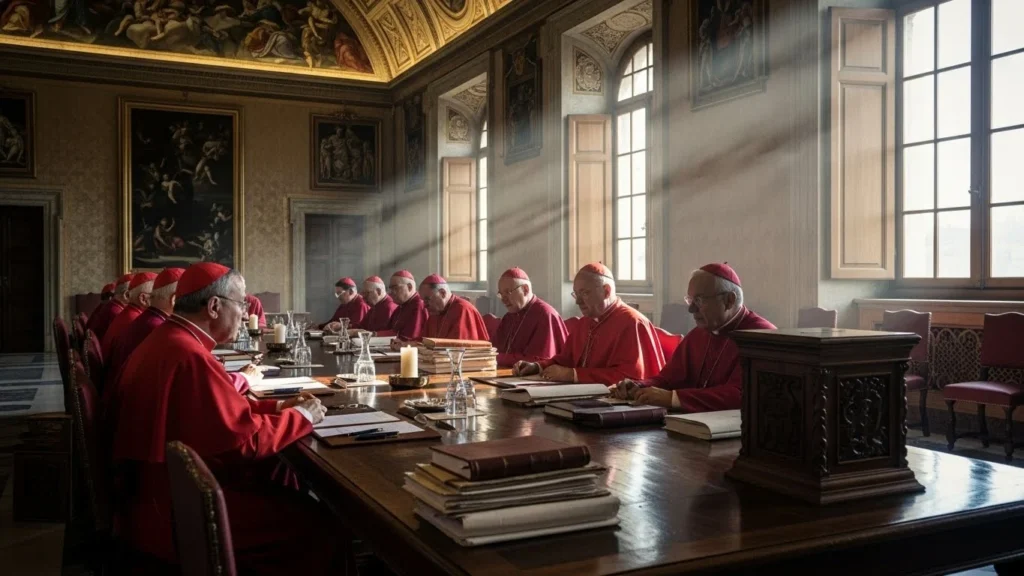
The word “conclave” comes from the Latin “conclavare”, which literally means “to lock up”—hinting at privacy and secrecy.
In modern English, a conclave is:
- A private meeting or assembly
- Often used for groups with authority (like the cardinals of the Catholic Church)
- Can also refer to exclusive professional or political meetings
Example Sentence:
“The board of directors held a secret conclave to discuss the company’s future.”
⭐ In short: Conclave = Private Meeting = A secret or exclusive gathering.
📱 Where Is Conclave Commonly Used?
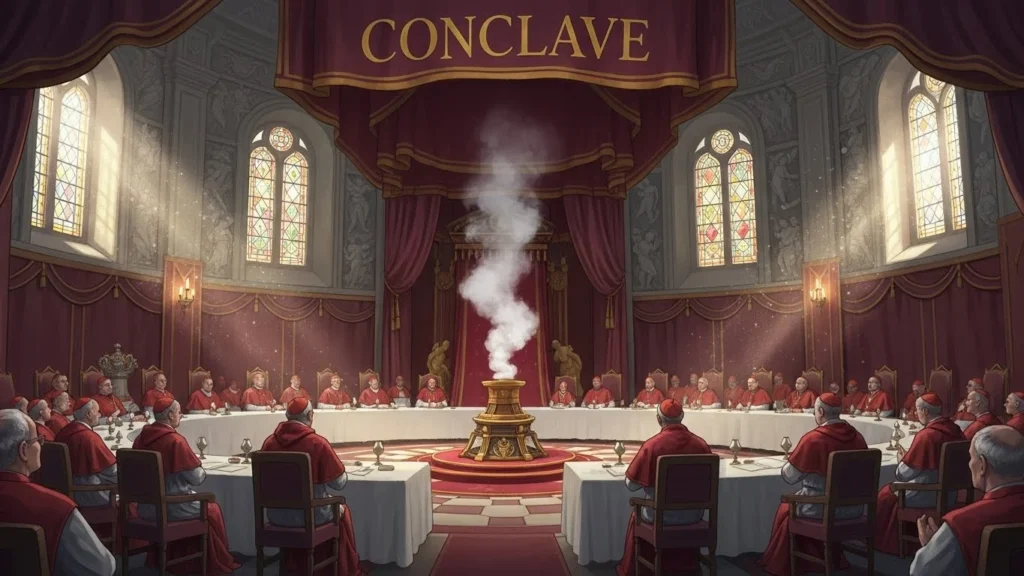
The word conclave is mostly used in:
- 🏛️ Political contexts – secret meetings or councils
- ⛪ Religious contexts – e.g., the Papal Conclave
- 💼 Corporate contexts – private strategy meetings
- 📚 Books, news articles, and formal writing
✨ Tone:
- Formal
- Serious and respectful
- Not casual or slangy
💬 Examples of Conclave in Sentences

Here are some realistic examples showing how conclave is used:
- “The cardinals are preparing for the conclave to elect the new pope.”
- “After weeks of planning, the company held a secret conclave to decide on its merger strategy.”
- “The political leaders met in a conclave to discuss national security.”
- “A literary conclave was organized to bring together famous authors for a discussion.”
- “The scientist convened a conclave of experts to debate the research findings.”
🕓 When to Use and When Not to Use Conclave

✅ When to Use Conclave
- Discussing formal meetings
- Writing about religious or political gatherings
- In corporate or academic contexts
- Talking about secret or exclusive events
❌ When NOT to Use Conclave
- Casual texting with friends
- Informal social media posts (unless jokingly exaggerated)
- Everyday meetings like “coffee with colleagues”
- Situations where “meeting” or “chat” is sufficient
Comparison Table
| Context | Example Phrase | Why It Works |
|---|---|---|
| Political Meeting | “The leaders met in a conclave.” | Formal & serious |
| Religious Setting | “The cardinals entered the conclave.” | Traditional & exclusive |
| Corporate Board | “A conclave was held to discuss mergers.” | Professional & confidential |
| Casual Chat | “Let’s have a meeting.” | Informal & clear |
🔄 Similar Words or Alternatives
| Word | Meaning | When to Use |
|---|---|---|
| Assembly | A gathering of people | Formal or semi-formal |
| Council | Group meeting for discussion | Political or professional |
| Meeting | General get-together | Casual or formal |
| Synod | Religious council | Religious contexts |
| Gathering | Any type of meet-up | Casual or informal |
| Forum | Public discussion or debate | Professional, academic, or political |
❓ FAQs About Conclave
1. Is conclave only used in religious contexts?
No. While famous in religious contexts, it’s also used in politics, business, and other formal settings.
2. Is conclave a casual word?
No. It’s formal and implies secrecy or exclusivity.
3. Can I use conclave for casual meetings?
It’s not recommended. Use “meeting” or “get-together” instead.
4. What’s the origin of the word conclave?
From Latin conclavare, meaning “to lock up,” referencing private or secret meetings.
5. Can conclave be plural?
Yes. Example: “Several conclaves were held over the year to discuss policy changes.”
Conclusion
The word conclave is your go-to term for secretive, formal, or exclusive meetings. Whether you’re reading about politics, religion, or corporate decisions, using “conclave” adds clarity and seriousness to your writing.
Next time you hear someone say a “conclave was held,” you’ll know exactly it’s not just any ordinary meeting—it’s a private gathering with purpose.
