
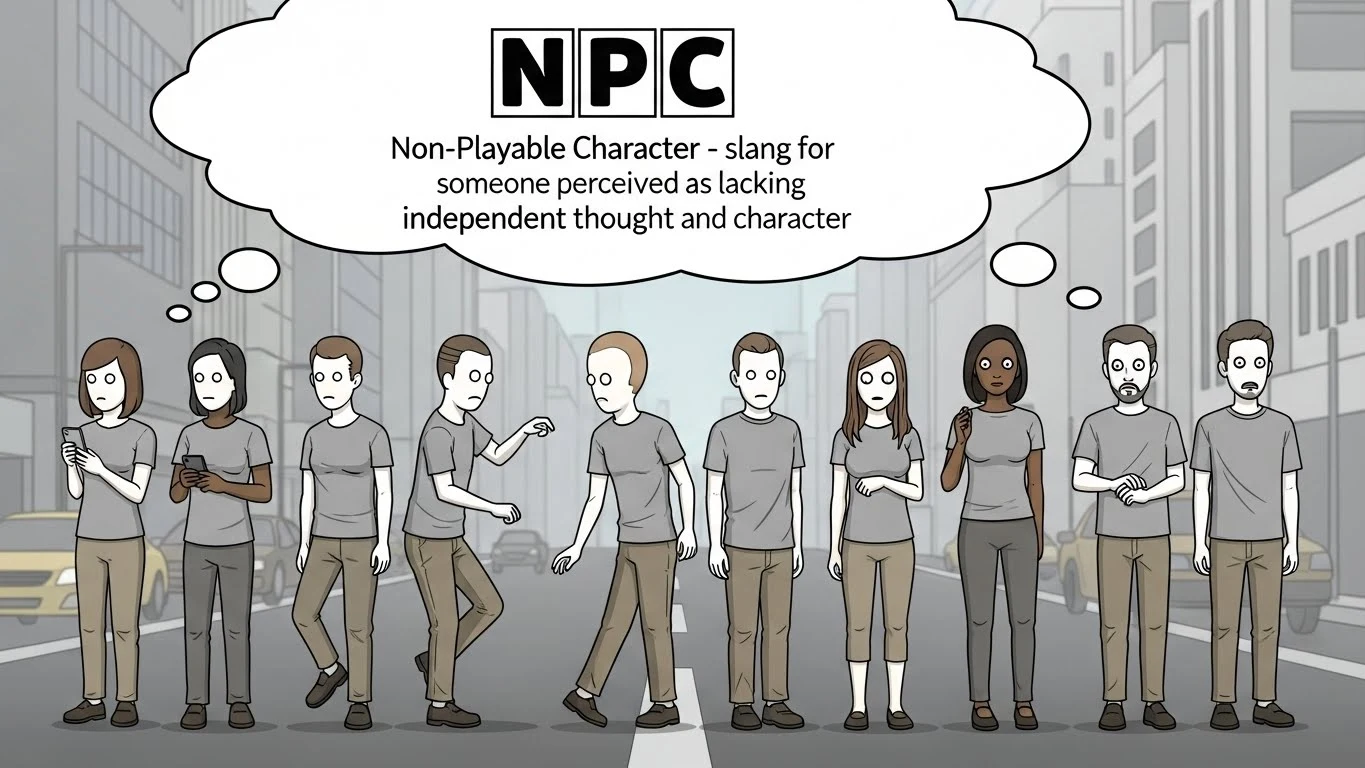
Language evolves fast, and internet culture moves even faster. If you’re active on TikTok, in gaming communities, or scrolling through meme pages, you’ve probably seen people call someone an “NPC.”
The term sounds simple, but its social meaning has become deeper, sharper, and sometimes controversial. It reflects how Gen-Z views individuality, online identity, social awkwardness, and digital behavior.
Understanding the modern context of this slang helps you not only decode memes but also communicate more confidently within youth culture. So let’s break it down in the most relatable, human, and real-life way.
⚡ Quick Answer (in simple words)
An NPC is someone who appears to act with little originality, personality, or independent thought — like a background character in a video game.
They seem to follow the crowd, repeat scripted ideas, or behave robotically in social situations.
What NPC Originally Meant: The Gaming Roots
NPC stands for Non-Playable Character in video games.
These characters aren’t controlled by players. They:
- Walk in programmed paths
- Repeat the same lines
- Have limited interaction patterns
- Serve a single purpose like selling items or giving quests
The main player has free movement and choices, while NPCs are static. That rigid, looped behavior became the perfect metaphor for human behavior in the real world.
From Gaming to Real Life: How the Meme Started
The term jumped from gaming into youth culture when internet users started comparing socially awkward, scripted, or closed-minded people to NPCs. TikTok, YouTube, and live streams boosted it further — especially when streamers reacted to pedestrians or online commenters behaving in predictable ways.
It became a simple line of mockery:
👉 “Bro is an NPC.”
👉 “She talks like an NPC.”
👉 “This comment section is full of NPCs.”
Suddenly, the gaming metaphor wasn’t just a joke — it became a vibe, a label, and a social commentary.
Why People Call Someone an NPC Online
People use the term for many reasons. Here are the most common interpretations:
1. Lack of originality
A person who copies trends without adding personality.
Example: The friend who buys whatever influencers buy, no questions asked.
2. Low self-awareness
Someone who lives on autopilot and doesn’t reflect on their actions.
3. Scripted responses
Repeating generic phrases like:
- “It is what it is”
- “Bro, it’s just life”
- “I saw it on TikTok”
4. Social awkwardness
They don’t know how to react naturally, so they feel robotic.
5. Mindless crowd behavior
Following viral trends simply because they’re viral.
When NPC Is Funny vs. When It’s Mean
The term has two sides:
🟢 Playful funny use
- With close friends
- Gaming communities
- Meme humor
- Describing a goofy moment
Example:
Your friend drops food, freezes, then walks away in silence →
“Okay NPC moment 😂”
🔴 Hurtful or demeaning use
- To shame someone’s intelligence
- To dismiss personal identity
- To attack someone’s social class or views
- To imply someone isn’t “fully human”
Be careful: calling strangers NPCs can make you seem rude or elitist.
The TikTok “NPC Streamers” Trend
In 2023–2024, TikTok live creators turned the concept into performance art. They acted like in-game characters responding to donations with repeated lines:
🎈 “Ice cream so good!”
🔥 “OMG strong!”
💫 “Yum yum!”
These clips blew up because:
- They were hypnotic
- They felt like watching AI in human form
- They blurred reality and digital performance
The world said:
👉 “This is what NPC looks like IRL.”
That trend cemented the term into modern slang culture.
Why Gen-Z Loves This Term
Gen-Z didn’t just adopt NPC slang — they weaponized it. Why?
🔹 Anti-conformity identity
Many young people value being unique.
Calling someone an NPC implies:
“I’m the main character. You’re just background.”
🔹 Meme language is efficient
Instead of explaining:
“You act predictably and lack self-awareness.”
They just say:
“NPC.”
🔹 Digital-native thinking
Life is gamified:
- XP = experience
- Leveling up = growth
- Boss fight = challenges
- NPC = passive people
It makes communication relatable across platforms.
Common Ways NPC Is Used
Here are real-world examples to help you understand its vibe:
🎤 Social situations
“He just keeps giving one-word answers. Total NPC.”
🏫 School or university
“Half the class copied the assignment template. NPC behavior.”
📱 Dating apps
“Everyone says the same 3 lines. Feels like NPC swiping.”
🕹️ Gaming chats
“That guy runs straight into the same trap every match—NPC move.”
💼 Workplace
“Office dude follows every rule without thinking. NPC energy.”
👥 Random strangers
“The supermarket cashier scanned everything silently… NPC mode.”
How to Know if You’re Using It Correctly
NPC isn’t a technical insult. It’s a social vibe check.
Use it when someone:
- Repeats common thoughts without reflection
- Behaves oddly robotic
- Echoes trends without identity
- Acts like they’re not fully present
Avoid using it to target:
- Neurodivergent people
- Workers doing their jobs
- People from different cultures
- Elderly individuals
- Anyone simply quiet or shy
Context is everything.
NPC vs. Main Character Energy
These two terms are often treated like opposites.
🟣 Main Character Energy
- Self-aware
- Confident
- Individualistic
- Unique style
- Personal narrative arc
🟠 NPC Energy
- Passive
- Predictable
- Emotionless
- Scripted responses
- Lacks initiative
But the reality is more complicated:
- Everyone has NPC moments.
- Nobody is “main character” 24/7.
- Social dynamics shift.
Sometimes you’re the hero, sometimes you’re the background.
NPC vs. Bot — Not the Same Thing
People confuse these terms all the time.
🤖 Bot
- Often automated
- AI-generated
- No human identity
- Programmatic interactions
👤 NPC (in slang)
- Actual human
- Real personality
- Limited or repetitive thought
- Culturally influenced behavior
A bot isn’t aware.
An NPC could be aware… but doesn’t act like it.
Why “NPC” Went Viral in Memes
Memes spread concepts better than essays. The NPC meme works because:
- Everyone has seen weird strangers
- Everyone has had awkward conversations
- Everyone has scrolled through robotic comment sections
You see someone behave like a simulation glitch →
Boom: “NPC spotted.”
The humor is universal.
Psychological Angle: Why It Hits So Hard
The term is powerful because it challenges identity.
Being called an NPC implies:
- You don’t think for yourself
- You don’t matter in the story
- You’re not real enough
That threatens core human needs:
- Recognition
- Value
- Individuality
It’s basically a modern insult wrapped in gaming culture.
Is Calling Someone NPC Toxic?
Short answer: it can be.
It becomes toxic when:
- Used to bully introverts
- Mock neurodiverse people
- Dismiss someone’s ideas without discussion
- Used to claim superiority
It’s healthier to ask:
“Why do they act like that?”
Instead of:
“They’re just NPCs.”
When It’s Harmless: Relatable NPC Moments
Life is weird. We all glitch sometimes.
Examples:
- You forget what you were saying mid-sentence
- You stare at the subway map like a zombie
- You rehearse your order at Starbucks
- Your brain lags after a long day
Nobody is a main character 24/7.
NPC moments are simply human.
How Brands and Influencers Use NPC Culture
Influencers weaponized NPC aesthetics:
- Neutral facial expressions
- Monotone voices
- Emotionless reactions
It became a content strategy
because:
- It looks surreal
- People stop scrolling
- It triggers comments
- It invites parody
Even big brands hopped on:
- AI-inspired characters
- Robotic ad scripts
- “Glitch in the system” visuals
NPC became marketing.
How to Respond if Someone Calls You an NPC
You can handle it confidently:
🟢 Playful reply
“NPC with premium DLC, don’t worry.”
🟢 Self-aware humor
“Temporary lag. Loading personality…”
🟢 Calm real-world approach
“If you see something off, just tell me.”
Never fight fire with insecurity.
Humor wins every time.
Conclusion
The internet’s language is always evolving, and NPC culture is a perfect example of how digital metaphors enter real social life.
It started as a gaming term, then transformed into commentary on individuality, social awkwardness, and conformity.
At its best, it’s a fun joke shared among friends. At its worst, it’s a tool to dehumanize people. Understanding the nuance helps you use the term responsibly and know when it crosses the line.
Remember: everyone has main character days… and NPC days. You’re not defined by either.
