
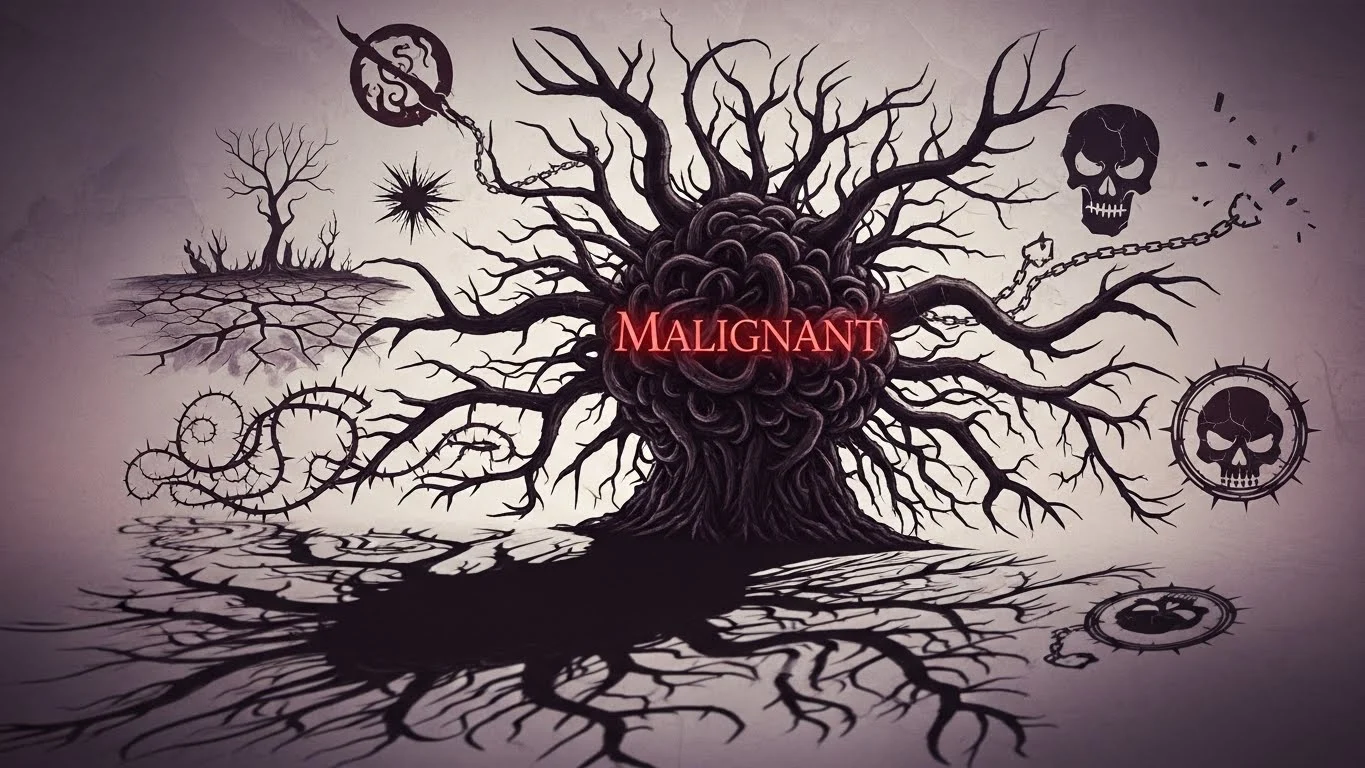
Words shape how we understand the world. Some words feel harmless, even gentle. Others carry weight, seriousness, or urgency. And then there are words that instantly shift a conversation into a dramatic, medical, or psychological space.
One of those words is malignant. It pops up in hospital shows, medical reports, crime thrillers, and even everyday gossip yet many people misinterpret it or only know half of its real definition.
Understanding what it means in different contexts can help you respond better, read situations more accurately, and avoid unnecessary panic.
Whether you saw the term in a doctor’s report, read it in an online forum, or heard a character whisper it on a Netflix horror series, this breakdown explains it clearly, simply, and in real-life terms.
Let’s decode it like humans, not textbooks.
⭐ Quick Answer
“Malignant” describes something harmful, dangerous, or aggressively worsening—especially in a medical context where it refers to cancerous growths that spread.
That’s the core idea. But there’s a lot more to unpack depending on how, where, and why the term appears.
Understanding “Malignant”: Clear, Everyday Meaning
Think of the word as the opposite of “safe,” “benign,” or “harmless.”
It signals growth that spreads, damage that increases, or intent that causes harm.
In medical language, it usually refers to a disease—especially tumors—that:
- grow uncontrollably,
- invade surrounding tissues,
- can move to other parts of the body,
- become life-threatening if untreated.
In a non-medical sense, the term can also describe behavior, influence, or actions that are destructive or cruel.
Three simple angles:
- Physical harm: Dangerous growth or illness.
- Behavioral harm: Hostile, toxic, or cruel personality traits.
- Cultural harm: Movements or ideas that spread negativity or damage.
Medical Context: Where Most People Encounter It
When doctors use the term, they’re usually not being dramatic. They’re being precise.
🧬 In Medical Terms
A malignant tumor means:
- It’s cancerous.
- It has potential to spread to other organs (metastasis).
- It can damage healthy tissues.
- It requires urgent or specialized treatment.
Simple Example:
- A doctor finds a lump.
- Tests show the cells divide rapidly and invade nearby tissue.
- They call it malignant.
It doesn’t automatically mean hopeless—it means serious and treatable with the right plan.
Why It Matters:
Knowing the difference helps you process medical news.
- Benign = non-cancerous, stays local.
- Malignant = cancerous, can spread.
This difference shapes treatment, urgency, and long-term care.
Non-Medical Context: Words, Behavior, and Vibes
Sometimes people use the term to describe negativity that acts like a spreading infection—emotionally, culturally, or socially.
🧠 Personality and Influence
“Malignant” can describe humans or groups whose actions are intentionally damaging.
Examples:
- A leader who manipulates people with harmful intent.
- A bully who spreads cruelty and fear in a group.
- A rumor that wrecks someone’s reputation.
This isn’t about illness. It’s about harm + spread + intent.
Scenario:
“That influencer’s comments had a malignant effect on the community.”
Here, it means toxic and damaging.
Literature, Movies, and Pop Culture
Writers love intense, sharp words. That’s why you’ll hear the term in:
- horror films,
- medical dramas,
- psychological thrillers,
- dark fantasy.
When a character or creature is described with the term, it signals:
- danger
- unpredictability
- aggression
- something that grows or infects
Examples in storytelling:
- An evil force infecting a city.
- A demon spreading chaos.
- A corrupt system consuming society.
The word becomes a red flag.
It hints: “This thing doesn’t just exist—it spreads.”
Why People Fear the Word
Because it’s often linked to illness, the term quickly triggers emotional alarm bells.
💔 Emotional Interpretation
It carries:
- Uncertainty
- Risk
- High stakes
- Medical seriousness
Even if someone hears it casually, they imagine the worst. This is why context matters. The term doesn’t always equal fatal. It means dangerous and needs attention.
Communicating About It Without Panic
If you hear such a word from a friend, doctor, or coworker, here’s how to handle it like a grounded adult:
✔️ Don’t jump to conclusions.
Ask:
- What exactly does it refer to?
- Is it medical, emotional, or metaphorical?
✔️ Ask clarifying questions.
Words like this deserve precision.
✔️ Seek professional explanation.
Doctors don’t use terms loosely.
Therapists and experts clarify nuance.
Creators use it as a narrative device.
Breaking Down Similar Terms (So You Don’t Get Confused)
🌱 Benign
Non-cancerous or not aggressive.
Example: harmless growth or attitude.
🔥 Aggressive
Fast-spreading or intense.
Example: “aggressive infection” or “aggressive marketing.”
🕸️ Toxic
Emotionally damaging but not necessarily invasive.
Example: a toxic coworker.
🩺 Metastatic
A condition that has already spread from its original site.
Each shares a vibe of severity, but none are identical.
Everyday Usage: Real-World Examples
1. Workplace
“A malignant office culture ruins productivity.”
Meaning: negativity spreads; everyone suffers.
2. Online Communities
“A malignant rumor can destroy a creator overnight.”
Meaning: information infects quickly.
3. Relationships
“Malignant jealousy can tear couples apart.”
Meaning: it grows and leads to harmful outcomes.
How Language Shapes Reactions
When a doctor says:
“The tumor is malignant.”
You hear urgency.
When a writer says:
“Their heart was malignant.”
You feel symbolism—evil, danger, cruelty.
Same word.
Different emotional layers.
Why Precise Language Matters
Using heavy words casually can mislead or scare people.
If a friend complains:
“I’m dealing with malignant feelings today.”
It creates confusion or worry.
Better alternatives:
- “I’m overwhelmed.”
- “I’m anxious.”
- “I’m dealing with negativity.”
Save heavier vocabulary for contexts that justify it.
Coping When You Encounter the Word
If the term appears in a medical setting:
- Stay calm.
- Ask questions.
- Take notes.
- Bring someone with you if possible.
- Request written details or reports.
If it appears in social, emotional, or political discussions:
- Analyze intent.
- Look for patterns of harm.
- Own your boundaries.
- Disconnect if necessary.
Why Misunderstanding Is Dangerous
Overestimating its meaning causes panic.
Underestimating it causes ignorance.
That balance matters.
People make poor decisions because:
- They Google symptoms without context.
- They read sensational posts.
- They avoid expert advice.
- They mishear one medical term and spiral.
Understanding words protects mental health.
How Gen-Z Interprets It
On TikTok, Twitter, or YouTube, the word sometimes becomes dramatic slang:
- “That villain is malignant.”
- “Her aura is malignant.”
- “That comment thread is malignant.”
It’s edgy.
It’s exaggerated.
It carries shock value.
But just like calling everything “trauma,” “gaslighting,” or “narcissistic,” it blurs meaning.
Not everything dangerous is the word.
Not everything harmful has intent.
Not everything negative spreads.
Use it intentionally.
Words have consequences.
Cultural and Social Impact
This term often shows up when people talk about:
- systemic corruption,
- authoritarian behavior,
- extremist ideologies,
- harmful online trends.
It signals spreading harm, not isolated mistakes.
Example:
“A malignant political movement undermines the freedom of citizens.”
Here, it paints a picture of danger expanding across society.
Knowledge Empowers, Fear Weakens
Learning definitions helps people:
- Make informed decisions.
- Respond calmly to difficult news.
- Support friends or family with clarity.
- Recognize destructive patterns sooner.
- Respect seriousness when it’s present.
The term isn’t meant to terrify you—it’s meant to warn you.
Like a red traffic light:
- It doesn’t kill you.
- It stops you from being reckless.
Final Thought 🌱
Language is powerful. Sometimes we hear a word that feels bigger than us complex, technical, intense. But words are tools. Understanding them removes fear and replaces it with strength.
The term we explored today is serious, but it’s also a reminder to pay attention, ask questions, and make informed choices.
In medicine, in society, and in relationships, recognizing harmful patterns early can be the difference between chaos and growth.
Use heavy vocabulary wisely.
Use knowledge compassionately.
Use understanding to support yourself and others.

Chloe Evans is the creative soul behind the heartfelt stories and magical moments shared on this anniversary journey. Passionate about celebrating love, Chloe brings together the beauty of timeless relationships through inspiring narratives, photography, and personal experiences. With a deep appreciation for the milestones that define true love, Chloe’s words capture the essence of enduring bonds and the joy of every anniversary moment.