
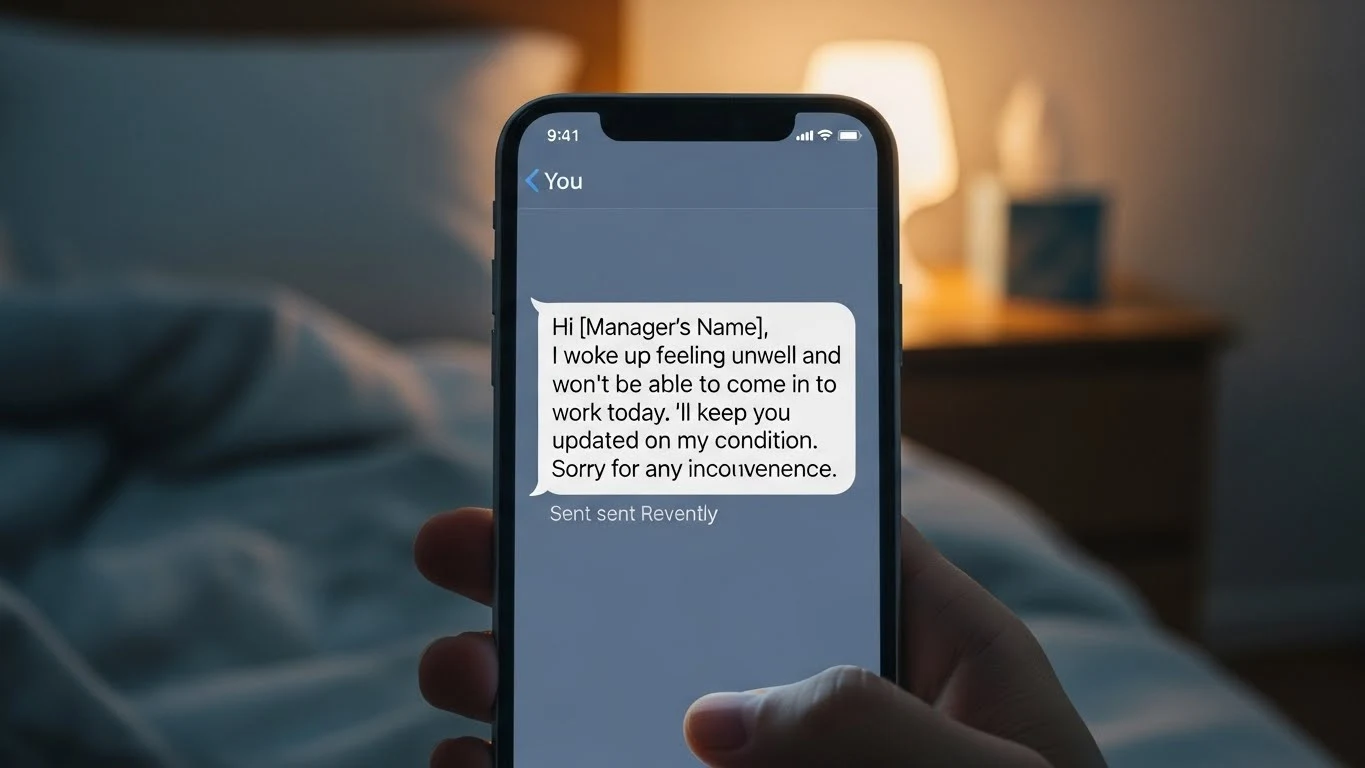
Calling in sick doesn’t have to be awkward, stressful, or dramatic. In 2025, a simple, respectful message can do the job without oversharing or sounding fake.
Whether you’re actually unwell, mentally drained, or just need a recovery day, knowing 🚀how to call in sick text🚀– the right way matters more than ever.
This guide breaks everything down in a simple, Gen-Z-friendly way. Short messages. Real examples. No cringe. No overthinking.
Let’s do it the smart way.
⚡ Quick Answer
Send a short, polite message as early as possible.
Mention you’re unwell, say you won’t be able to work today, and (if needed) note when you’ll update them.
No long stories. No emojis at work. No guilt-dumping.
Example:
“Hi [Name], I’m not feeling well today and won’t be able to come in. I’ll keep you posted if anything changes. Thanks for understanding.”
That’s it. Simple. Professional. Done.
Why Texting Is Now Totally Normal
Let’s be real. Nobody is calling unless they have to.
Texting is now:
- Faster ⏱️
- Less awkward 😅
- More respectful of everyone’s time
- Standard in many workplaces
As long as your workplace allows it, a message is perfectly acceptable—especially for short notice or early-morning updates.
When You Should Send the Message
Timing matters more than wording.
Best Times to Send
- As early as possible
- Before your shift starts
- Before schedules or meetings are affected
Avoid:
- Sending it last minute unless unavoidable
- Texting during peak work chaos
- Waiting until someone asks where you are
Early notice = professionalism points.
What Your Sick Message Should Include
Keep it clean and structured.
The 3 Must-Have Elements
- Polite greeting
- Clear statement you’re unwell
- Confirmation you can’t work today
Optional extras:
- When you’ll update them
- Whether urgent tasks are covered
That’s all. No essays.
What NOT to Say (Please Read This)
Some things make messages worse instead of better.
Avoid These Mistakes
- ❌ Over-explaining symptoms
- ❌ Dramatic excuses
- ❌ Lying in detail
- ❌ Sounding guilty or apologetic
- ❌ Emojis in professional texts
You’re informing, not begging.
Short & Professional Message Examples
Basic and Safe
“Hi [Name], I’m feeling unwell today and won’t be able to work. I’ll check in tomorrow. Thanks.”
If You Have a Meeting
“Hi [Name], I’m not well today and need to take the day off. I won’t be able to attend the meeting—sorry for the short notice.”
If You’re Remote
“Hey [Name], I’m feeling under the weather and won’t be productive today. I need to take a sick day.”
Casual Workplace? These Work Too
If your office culture is relaxed, you can soften the tone—without losing respect.
“Hey [Name], woke up feeling really sick today. Going to take a sick day and rest. Will update you later.”
Friendly ≠ unprofessional.
Mental Health Days Count Too
Burnout is real. Mental health is health.
You don’t need to explain details.
Good Mental Health Day Messages
- “I’m not feeling well today and need to take a sick day.”
- “I need to take today off for health reasons.”
That’s enough. Your health isn’t a debate.
What If You’re Sick for Multiple Days?
Be upfront but still brief.
“Hi [Name], I’m still unwell and won’t be able to return today. I’ll update you again tomorrow.”
If your workplace requires a doctor’s note, follow policy—but don’t overshare in text.
Should You Mention Symptoms?
Short answer: No.
Long answer:
- Managers don’t need details
- Oversharing feels unprofessional
- It can make people uncomfortable
Stick to:
- “Not feeling well”
- “Unwell today”
- “Health reasons”
Clean and neutral wins.
Is It Okay to Lie?
Real talk.
- Chronic lying = bad idea
- Occasional mental-health recovery = valid
- Detailed fake stories = risky
If you need a day off, keep it vague and respectful. Don’t trap yourself in fake details.
Text vs Call: Which Is Better?
Text Is Best When:
- Company culture allows it
- It’s early morning
- You’ve done it before
- You’re remote or hybrid
Call If:
- Policy requires it
- You’re in healthcare or retail
- You’re calling out last minute
When unsure, check your handbook or past behavior.
Follow-Up Etiquette (Yes, This Matters)
The next day, a quick check-in helps.
“Hi [Name], I’m feeling better today and will be back as scheduled.”
It shows responsibility and reliability.
Real-Life Scenarios (Relatable Edition)
Scenario 1: First Job Anxiety
You’re nervous about texting your boss.
Solution:
Use a neutral, professional template. Keep it simple.
Scenario 2: Internship Fear
You don’t want to look unreliable.
Solution:
Early notice + short message = maturity.
Scenario 3: Burnout Mode
You’re mentally exhausted.
Solution:
Take the day. Say “health reasons.” No guilt.
Pro Tips to Sound Confident (Not Guilty)
- Use clear language
- Avoid “I’m so sorry” unless needed
- Don’t ask permission—state the situation
- Keep sentences short
Confidence = credibility.
Why This Actually Matters
How you communicate sick days affects:
- Trust
- Professional image
- Workplace relationships
A clean message protects your energy and your reputation.
Final Thoughts
Calling in sick by text doesn’t have to feel scary or awkward. The key is clarity, respect, and timing. Keep it short. Keep it honest. Keep it professional.
Your health comes first always.
A good message just makes everything smoother.
Rest well. Recharge. Come back stronger.
